

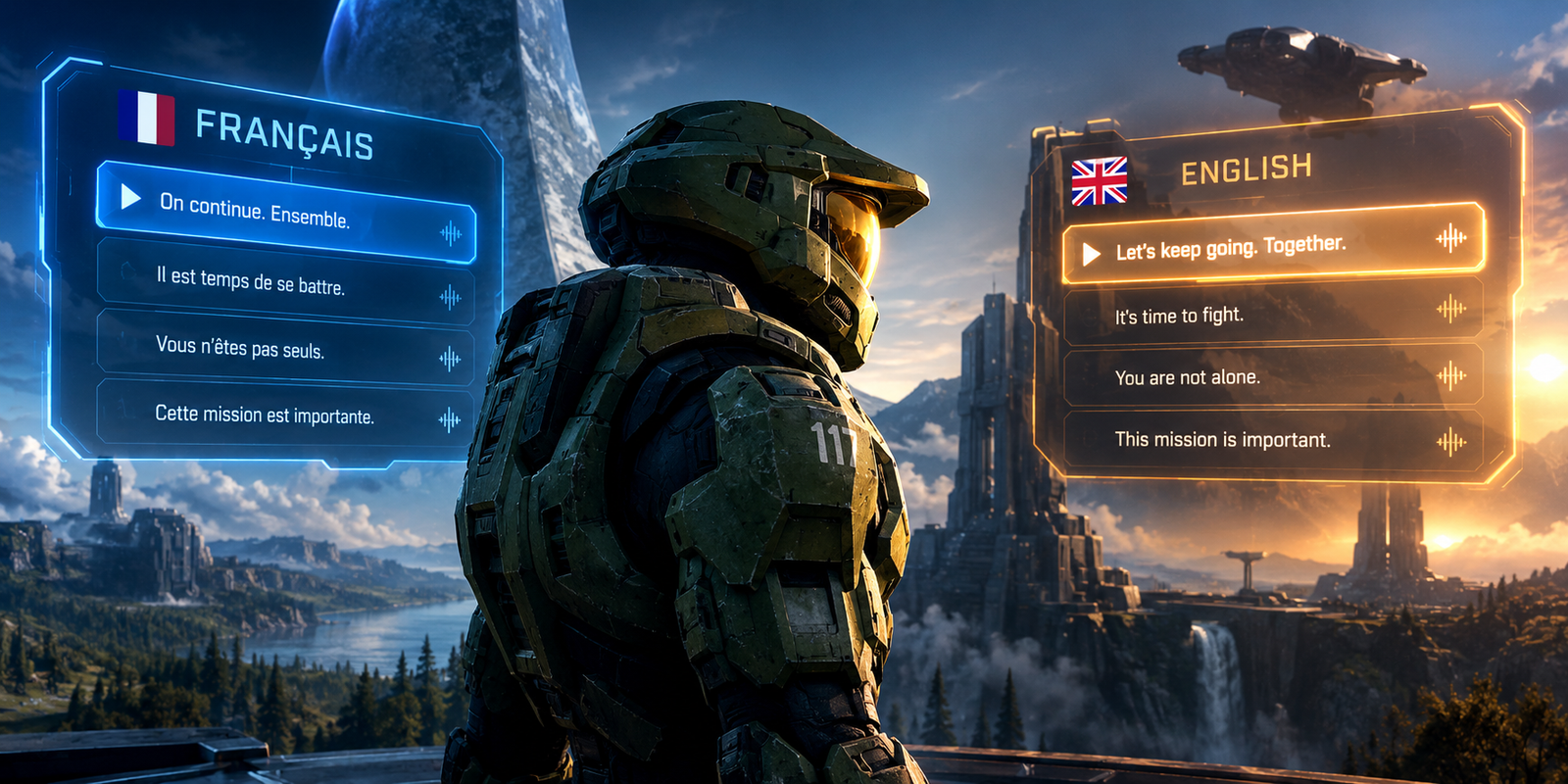
There was a time when launching a major video game meant hearing familiar voices, following conversations in your own language, and meeting characters who could make you forget you were sitting in front of a screen. Today, some players are facing a different reality: French menus, French subtitles, but characters who still speak English.
On paper, the game remains perfectly understandable. In practice, something has changed.
The absence of French voice acting, commonly referred to as the French dub or VF, does not affect every game or publisher. However, several releases and updates have reignited the debate, particularly among French players. And contrary to what some might think, the reasons go beyond simple budget cuts.
So why are some games dropping French voice acting? Why are French players pushing back so strongly? And more importantly, what do we actually lose when those voices disappear?
Why Are Some Games Dropping French Voice Acting?
It’s About Money, but That’s Not the Whole Story
Let’s start with the most obvious explanation: dubbing costs money.
Translating a video game is not simply a matter of replacing a few English words with their French equivalents. It involves adapting dialogue, casting voice actors, organizing recording sessions, directing performances, integrating audio files, and making sure everything works properly in the game.
The sheer volume of dialogue can quickly drive up costs. An RPG featuring dozens of hours of conversations, hundreds of characters, and countless conditional dialogue lines requires a much larger investment than a game built primarily around action.
Then there are the updates. In a live-service game, every new season can introduce missions, characters, events, and additional dialogue. Localization costs therefore do not necessarily end when the game launches.
For publishers, every language represents an investment that must make commercial sense. When budgets shrink or priorities change, certain audio versions may be considered less essential.
That’s an economic reality that is difficult to deny. But it doesn’t explain every recent case.
The Complicated Issue of AI-Related Contracts
Since 2025, another issue has made its way into recording studios: the use of voice actors’ recordings to train AI systems or generate synthetic dialogue.
In January 2026, JeuxOnLine reported that several Microsoft and Electronic Arts productions were affected by the absence of French voice acting, including certain content related to The Elder Scrolls Online, World of Warcraft, and Apex Legends.
The disagreement centers in part on contractual clauses governing the use of recorded performances. Voice actors’ representatives want contracts to explicitly prohibit the use of their recordings to train AI systems or create synthetic voices without specific authorization.
For performers, this goes far beyond the fee paid for a recording session. A voice is a professional tool, but it is also an identity built over years of work. Allowing it to be reused to generate new dialogue without sufficient safeguards raises serious questions about consent, compensation, and control.
Publishers, meanwhile, are trying to establish the terms under which these technologies can be used in their productions.
The outcome is particularly frustrating for players: when negotiations break down, they can end up losing access to French voice acting.
It’s important to distinguish between individual cases. Not every missing French dub is the result of an AI-related contract dispute, and it would be misleading to blame every localization decision on these conflicts. In some cases, budgets, deadlines, or production choices may still be the main factors.
But the current tensions make one thing clear: French voice acting has become a question of workers’ rights and contractual protections, not just localization.
The French Gaming Community Is Pushing Back

When a game launches without French voice acting, the reactions usually come quickly. Forums, social media, petitions, and comment sections fill with players demanding answers or calling for the return of French voices.
The backlash is particularly strong when previous entries in a franchise included a French dub.
Consider a live-service game that has been around for several years. Players have grown accustomed to the voices of their favorite characters. They’ve followed storylines, taken part in events, and sometimes spent thousands of hours in the same universe.
Then an update arrives. The text is still in French, but the voices are gone.
From the publisher’s perspective, this might be a technical or contractual change. From the player’s perspective, it’s a step backward in a service they’ve already invested in.
The frustration grows when players cannot understand why one language has lost its new recordings while others continue to receive them.
Is French Becoming a Second-Class Language ?
That’s one of the most common criticisms. Players sometimes feel that the French-speaking market is considered important enough to buy the games, but not important enough to receive the same experience as other audiences.
That perception deserves to be examined on a case-by-case basis. Localization decisions vary from one production to another, and the absence of a language does not automatically mean a publisher has little regard for its audience.
Still, perception matters. When a game sells for roughly the same price across several countries, players have every right to question differences in the experience they’re being offered.
The case of Forza Horizon 6 illustrates this frustration. The franchise’s French social media account announced that French voice acting would not be available, while confirming that French menus and subtitles would remain. According to that communication, negotiations with French voice actors could resume.
This is about more than personal language preferences. It also concerns continuity within a franchise and the trust between a publisher and its community.
Can Players Make Their Voices Heard Without Boycotting Everything ?
Absolutely, and it’s probably the most constructive approach.
Players can voice their dissatisfaction, ask for explanations, support community campaigns, and make their expectations clear in feedback surveys. They can also choose not to buy a game if the localization options don’t meet their needs.
What doesn’t help is turning the debate into a fight between French-speaking and English-speaking players. English isn’t the problem. The real issue is the ability to choose how you experience a game, along with how publishers treat the audiences they’re selling it to.
What French Voice Acting Actually Brings to Immersion
Reading a Scene and Experiencing It Aren’t Quite the Same Thing
Subtitles allow you to understand a conversation. A voice also allows you to interpret it.
The rhythm of a sentence, a hesitation, restrained anger, or a sarcastic tone can communicate things that go beyond the words on the screen.
In a story-driven game, these details help bring characters to life. A good voice actor doesn’t simply read a script. They give it intention, personality, and presence.
This becomes especially important during emotional scenes. A confession, an argument, or a farewell may not have the same impact when players have to read every line instead of listening to the characters speak.
French voice acting also lets players focus on the visuals, the animations, and the events unfolding on screen. It prevents them from constantly splitting their attention between reading and watching the action.
The Problem With Games That Already Demand Your Full Attention
In an RPG, reading subtitles during a conversation is usually manageable. In an action game, it’s a different story.
Imagine a mission where a character gives you instructions while you’re driving at high speed, fighting several enemies, or trying to survive a space battle. If important information is delivered only through subtitles, you have to choose between reading and watching what’s happening around you.
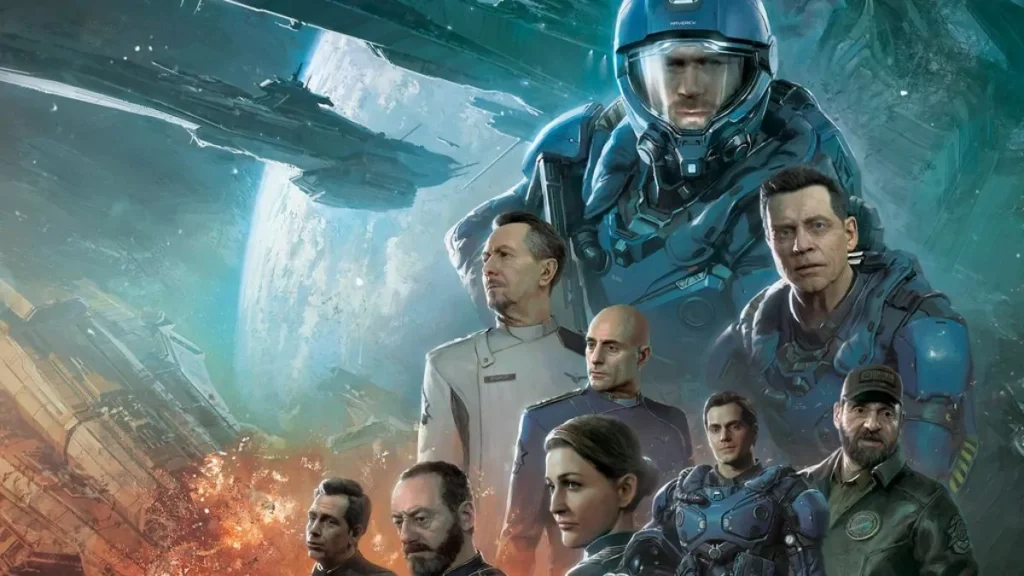
In a game like Star Citizen, where players may be piloting a ship, managing onboard systems, monitoring their surroundings, and communicating with other people at the same time, understanding spoken information can have genuine practical value.
Voice acting isn’t just a convenience for players who aren’t fluent in English. It can make the narrative interface feel more natural and improve accessibility.
That doesn’t mean a French dub is always better than the original audio. A particularly strong original performance can be a compelling reason to keep the original voices. But offering multiple audio tracks allows players to decide what works best for them.
Immersion Also Depends on Quality
It would be unfair, however, to claim that every French dub automatically improves a game.
Awkward translations, poor synchronization, or unconvincing performances can break immersion just as easily as missing voice acting. Some works are also best experienced in their original language, particularly when the voices are an essential part of their cultural identity.
The real goal isn’t to replace English with French across the board. It’s to offer a sufficiently polished adaptation so players can choose without feeling that they’re sacrificing part of the experience.
Translating a Game Means More Than Translating Lines
The debate over French voice acting is a good opportunity to highlight a distinction that is often overlooked: written translation and voice acting are two different stages of a broader process known as localization.
Localizing a game means adapting it for a specific audience. This can include text, menus, dialogue, cultural references, measurement units, display formats, and, depending on the project, voice acting.
Good localization preserves meaning while taking context into account.
A joke built around an English pun cannot always be translated literally. A cultural reference may need to be adapted. A technical term must remain consistent from one mission to the next, especially in games with complex worlds and their own specialized vocabulary.
The challenge becomes even greater in narrative-driven productions, where dialogue is closely tied to animations, character reactions, and the pacing of a scene.
That’s why machine translation, even when highly capable, cannot by itself replace a complete localization process. It can help teams work faster, but consistency, intent, and final quality still require proper review.
Artificial intelligence can be useful for assisting translators, identifying inconsistencies, or speeding up repetitive tasks. But it doesn’t remove the need for publishers to ensure that the final result is clear, natural, and appropriate for the game.
And when synthetic voices are involved, another question arises: what about consent from the performers whose work and recordings may have been used to create them?
Technology opens up new possibilities. It doesn’t eliminate the responsibilities that come with them.
Is French Really Disappearing From Video Games ?
The situation calls for some nuance.
A study published by Cutscene on August 29, 2026, compared the languages offered by a sample of 130 notable games released between January and July 2026 with those offered by a sample of 60 titles from 2016.
According to the study, French was available as a written language in 86.4% of the 2026 sample with usable Steam listings, compared with 95.2% in the 2016 sample.
The difference was more pronounced when it came to voice acting: the proportion of games featuring French dubbing fell from 28.6% in 2016 to 13.6% in 2026, according to the study’s methodology.
These figures should be interpreted carefully. The study examined samples of games rather than the entire industry. It also doesn’t establish that every genre or publisher is following the same trend.
Nevertheless, the findings offer an interesting indication: within this sample, French voice acting declined more sharply than French text localization.
In other words, French remains widely available in interfaces and subtitles, while French voice acting is becoming less consistent across certain releases.
This isn’t the disappearance of French from video games. It’s a shift in how publishers choose to offer the language.
The Editorial Team’s Take
French voice acting isn’t an artistic requirement. A game can be excellent in English, Japanese, or any other language. And no one should be forced to prefer a dubbed version over the original.
But there’s a difference between the player’s choice and the publisher’s decision.
When multiple audio tracks are available, everyone can select the one that suits them. When French voice acting disappears, that freedom shrinks, even if subtitles still make the story understandable.
We understand the economic pressures facing an industry where production costs continue to rise. We also understand that localization can be a substantial undertaking, particularly for games that evolve over several years. Not everything can be dubbed into every language, and pretending otherwise would be unrealistic.
However, we believe French voice acting shouldn’t become an automatic cost-cutting target whenever budgets tighten or new technologies emerge.
AI can help localization teams. It may also allow smaller studios to offer more languages than ever before. But its use shouldn’t come at the expense of voice actors’ consent, the quality of the final product, or the trust of the audience.
There’s a difference between using a new tool to improve a process and trying to eliminate the people who make that work possible. That distinction needs to be clearly reflected in both contracts and industry practices.
Finally, players deserve to know what they’re buying. If a franchise has offered French voice acting until now and that option suddenly disappears, a clear explanation is better than prolonged silence. Dialogue with the community won’t make every solution possible, but it at least gives players a chance to understand the decisions being made.
French voice acting isn’t essential to every game. It remains, however, an important part of accessibility, immersion, and the diversity of experiences the industry has to offer.
Our position is simple: we’re not asking every game to be dubbed into French at any cost. We’re asking the industry to treat French voice acting as an option worth preserving, rather than a feature players should expect to lose.
Because a video game world can be vast, spectacular, and technically impressive. But if you end up spending more time reading its dialogue than experiencing its scenes, perhaps something is still missing.
And sometimes, that something is simply a voice.

Comments 0
No comments yet: start the conversation!
Your Discord name and picture will sign your comment. Be courteous: inappropriate comments are removed.