

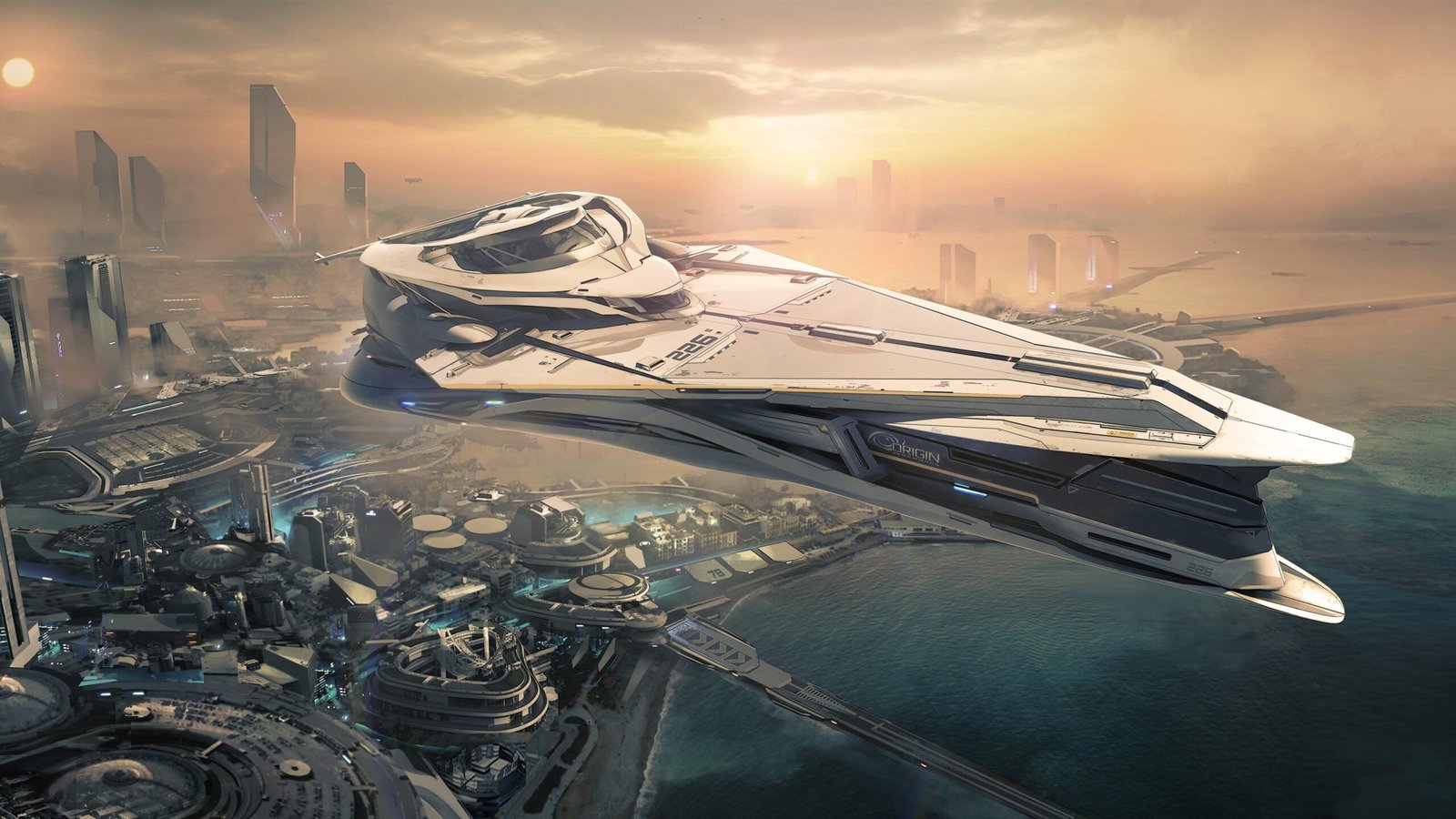
The Game the Industry Probably Would Never Have Funded

In October 2012, when Chris Roberts introduced Star Citizen, the video game industry was going through a particular phase. Consoles dominated the blockbuster gaming market, space simulation games had largely faded into the background, and publishers favored franchises capable of appealing to increasingly broad audiences.
The creator of Wing Commander proposed a radically different approach: breaking free from traditional publishers to develop the space simulator he had dreamed of for years, with financial support coming directly from players.
The success of its crowdfunding campaign gradually transformed that ambition into a project of an entirely different magnitude.
New goals emerged, features multiplied, development teams expanded, and technological ambitions evolved. What was initially intended to be an ambitious space game gradually became a full-fledged laboratory for video game development.
Fourteen years later, Star Citizen remains in alpha.
An eternity in an industry where some franchises have had enough time to emerge, disappear, get remastered, and return as remakes.
Yet, despite the controversies and challenges faced by Cloud Imperium Games, few studios have attempted to bring together such a wide range of technologies and simulation mechanics within a single game.
To understand why, we must first appreciate the nature of the problem CIG has taken on.
Star Citizen Isn’t Just Trying to Build a Big Game
Creating an open-world video game is hardly unusual today. Neither is developing a multiplayer game. Procedurally generating planets, simulating vehicles, or developing a first-person shooter are all challenges the industry has mastered to varying degrees.
What makes Star Citizen unusual is its ambition to bring all these experiences together within a coherent, persistent, and shared environment.
Imagine a player leaving their apartment in a futuristic metropolis and boarding a spacecraft several dozen meters long.
On board, another player is preparing cargo while a third keeps watch from a turret. The pilot takes off, leaves the atmosphere, reaches an orbital station, and then sets course for another star system.
Every character must be able to move freely. Every object must maintain a consistent state. The spacecraft must remain a physical environment in its own right while traveling through a much larger universe.
Now add hundreds of players, AI-controlled characters, combat, collisions, inventories, missions, and economic systems.
Suddenly, the nature of the challenge changes entirely.
It’s no longer simply about developing multiple gameplay mechanics. It’s about ensuring that all of them can function together without compromising one another.
This interdependence is precisely what makes Star Citizen such a complex project.
The Real Challenge: Simulating the Infinitely Large Without Sacrificing the Infinitely Small
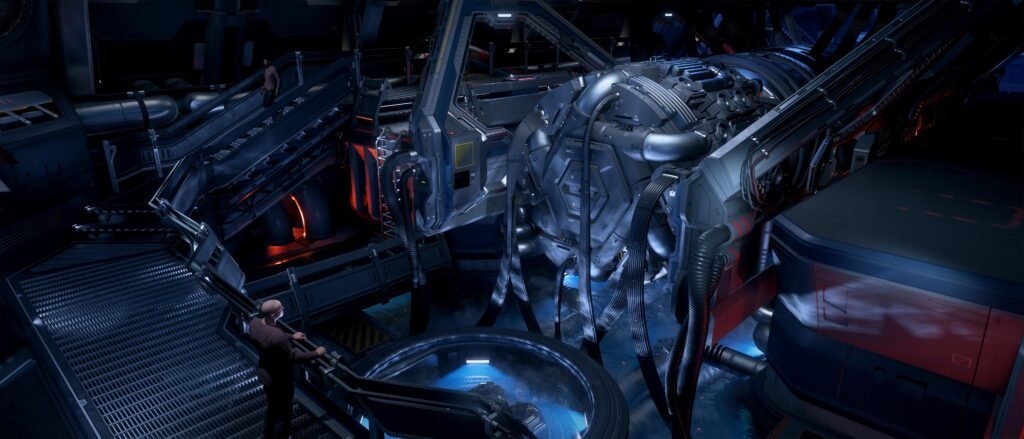
In traditional video games, developers define the boundaries of their playground based on the experience they want to deliver.
A racing game primarily needs to simulate vehicles and their behavior on a track. A shooter must handle movement, weapons, and interactions between combatants. A space game can focus its resources on flight mechanics and ship-to-ship combat.
Star Citizen attempts to make all these scales coexist.
Players must be able to examine the fine details of a weapon they’re holding before climbing into a spacecraft and traveling millions of kilometers.
However, computers face a particular challenge when dealing with coordinates located extremely far from their point of origin: numerical calculations become less precise.
In a sufficiently large world, this can cause collision issues, visual jitter, and positioning errors.
To address this problem, CIG upgraded its engine’s spatial coordinate system to a 64-bit architecture, allowing it to maintain sufficient precision across enormous distances.
But the challenges don’t end there.
When a player moves inside a moving spacecraft, the engine must manage multiple physical frames of reference. The character moves within the ship’s local environment, while the ship itself travels through the universe.
The coffee cup sitting on the table in your crew quarters needs to stay on that table, even when your pilot decides to travel across the solar system.
It sounds almost ridiculous when put that way, yet it becomes a genuine engineering challenge when those interactions must be synchronized across multiple players.
And in Star Citizen, even a cup of coffee can become an engineering problem.
StarEngine: Why Not Just Use Unreal Engine 5 ?

This is a question that frequently comes up in community discussions. Why does Cloud Imperium Games devote so many resources to developing its own technological framework when engines such as Unreal Engine 5 can already deliver spectacular results?
The answer largely comes down to the difference between an engine’s graphical capabilities and its simulation architecture.
Star Citizen was initially built on CryEngine before extensively modifying its technological foundations to meet the project’s specific needs. This collection of technologies is now known as StarEngine.
Unreal Engine 5 offers particularly advanced features for handling large distances, managing open worlds, providing dynamic lighting, and rendering complex geometry.
However, having an excellent graphics engine doesn’t automatically provide the architecture required to run a persistent, massively multiplayer space universe.
Object synchronization, inventory management, data persistence, distributing simulations across multiple servers, and transferring entities between those servers all require specialized development.
It would therefore be misleading to suggest that Unreal Engine 5 is incapable of replicating Star Citizen. A studio with the necessary expertise and resources could certainly develop suitable solutions using that engine.
But it would still have to solve many of the same problems Cloud Imperium Games has been tackling for years.
Switching engines wouldn’t eliminate the project’s complexity. It would largely shift the problem elsewhere.
Server Meshing: When One Server Is No Longer Enough
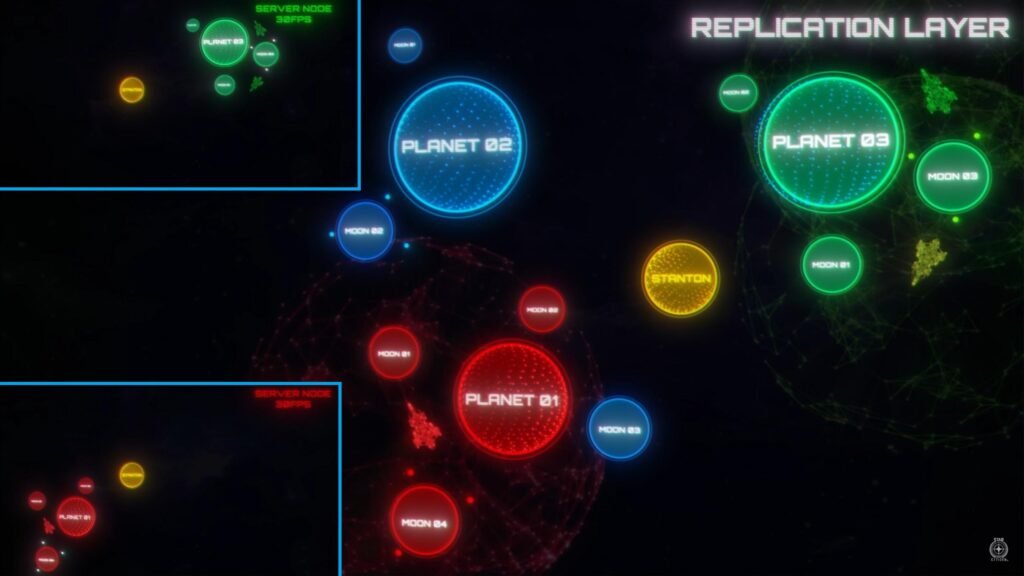
One of the greatest challenges in multiplayer gaming is the ability of servers to simultaneously process player actions and changes within their environment.
Every movement, projectile, collision, and interaction represents information that must be calculated, transmitted, and synchronized.
As the number of players and objects increases, so does the computational workload.
Traditionally, massively multiplayer games work around some of these limitations by dividing their populations across different servers, regions, channels, or instances.
Cloud Imperium Games is attempting to push these boundaries through Server Meshing.
The principle involves distributing the simulation of a shared universe across multiple servers capable of working together.
Imagine an enormous amusement park. Rather than placing a single person in charge of everything, each area has its own dedicated team, while a central system coordinates the entire operation.
Visitors can move freely from one area to another without leaving the park.
In Star Citizen, this architecture is intended to allow players to travel across territories managed by different servers while maintaining a seamless experience.
The first implementation of Static Server Meshing was introduced with Alpha 4.0 in late 2024. Among other things, it made it possible to connect the Stanton and Pyro systems within the same shared environment.
The next step is to make this distribution more flexible, allowing available resources to adapt to player concentrations and the complexity of ongoing events.
Dynamic Server Meshing does not, however, mean that an unlimited number of players will be able to gather in the same location. Interaction synchronization, bandwidth, and computational capacity will remain unavoidable physical constraints.
Nevertheless, it represents a particularly interesting approach to one of the fundamental challenges of large-scale virtual worlds.
Genesis: The Other Challenge of Building on an Enormous Scale
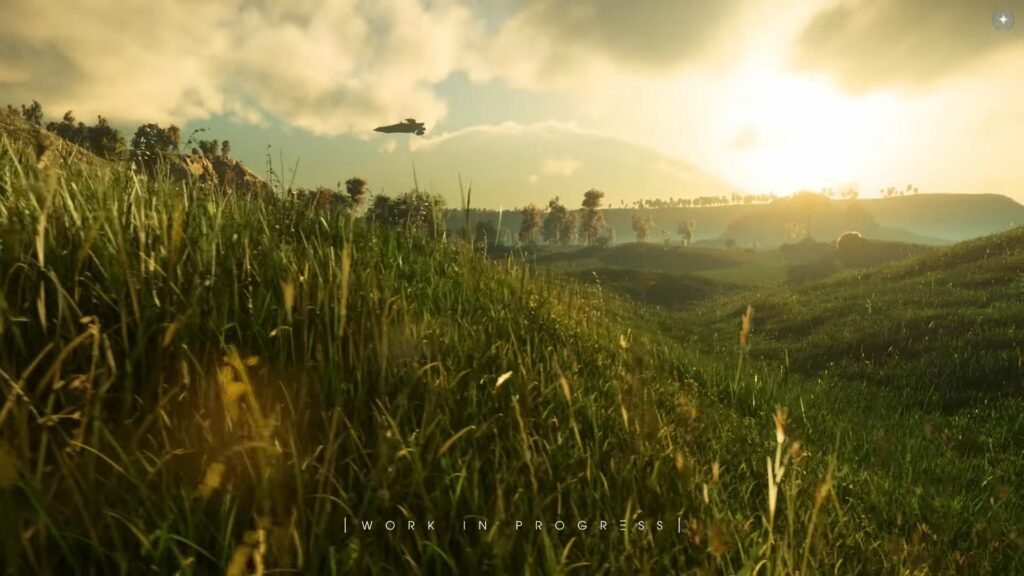
Solving networking challenges is only part of the equation. Developers still need to create a universe worth exploring.
When a studio builds a city in a video game, it can spend years employing artists to design buildings, streets, interiors, and points of interest.
How do you apply that approach to dozens of planets?
Even with thousands of developers, an entirely handcrafted approach would quickly become unsustainable.
This is one of the challenges Cloud Imperium Games is attempting to address with Genesis, a collection of technologies designed to streamline and scale the creation of its universe.
Planet Tech V5 aims to build natural environments using environmental rules, improving vegetation distribution and terrain diversity.
Starchitect is designed to simplify the assembly and placement of infrastructure using modular assets created by artists.
The Population Manager, meanwhile, is intended to populate these environments with inhabitants suited to their surroundings.
Announced among the major features of Alpha 5.0, these technologies seek to address both an artistic and an economic challenge: producing more content without proportionally increasing the workforce required to create it.
The goal isn’t to replace artists with algorithms, but to allow their work to be used on a much larger scale.
Of course, CIG must still avoid one of the biggest pitfalls of procedural generation: creating thousands of different locations that somehow all feel like the same place.
An enormous universe isn’t particularly interesting if it has nothing to say.
Elite Dangerous, No Man’s Sky, and Starfield: Competitors That Made Different Choices
Claiming that Star Citizen is the only ambitious space game would be unfair to the rest of the industry.
Several studios have taken on considerable challenges, sometimes in areas where Cloud Imperium Games’ project still falls well short.
The difference lies primarily in their priorities.
Elite Dangerous: Astronomical Scale
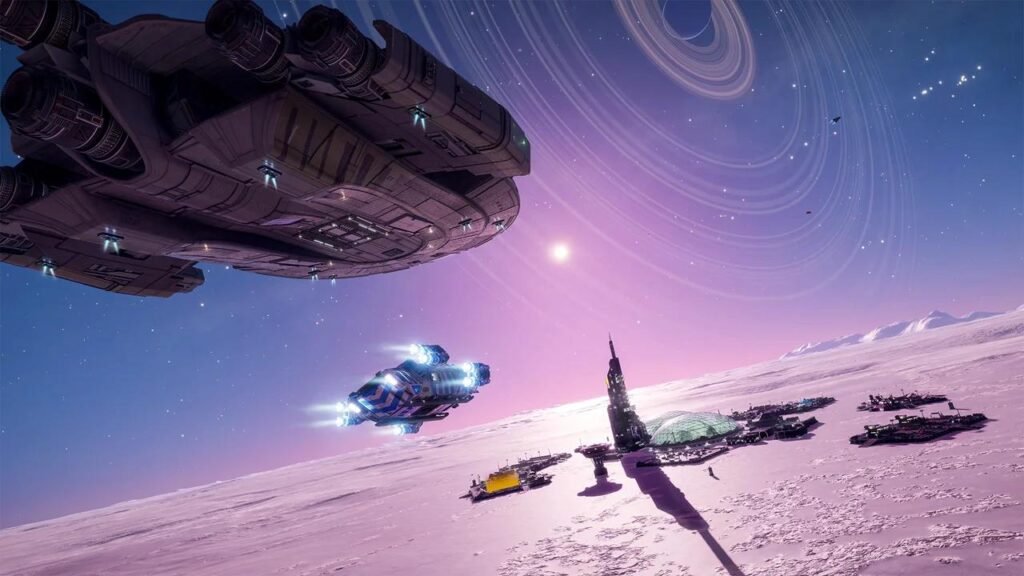
With Elite Dangerous, Frontier Developments chose to recreate the Milky Way on an astronomical scale, offering approximately 400 billion star systems.
Its procedural generation system, Stellar Forge, draws on astronomical data and models of planetary system formation.
The project’s scientific ambition is remarkable.
The Odyssey expansion, released in 2021, also introduced the ability to leave the cockpit and explore various environments on foot.
However, Frontier has historically prioritized flight, exploration, and the representation of our galaxy rather than systematically simulating spacecraft interiors and physical interactions between their occupants.
Elite Dangerous isn’t necessarily less ambitious. Its ambitions are simply different.
No Man’s Sky: The Universe as a Playground
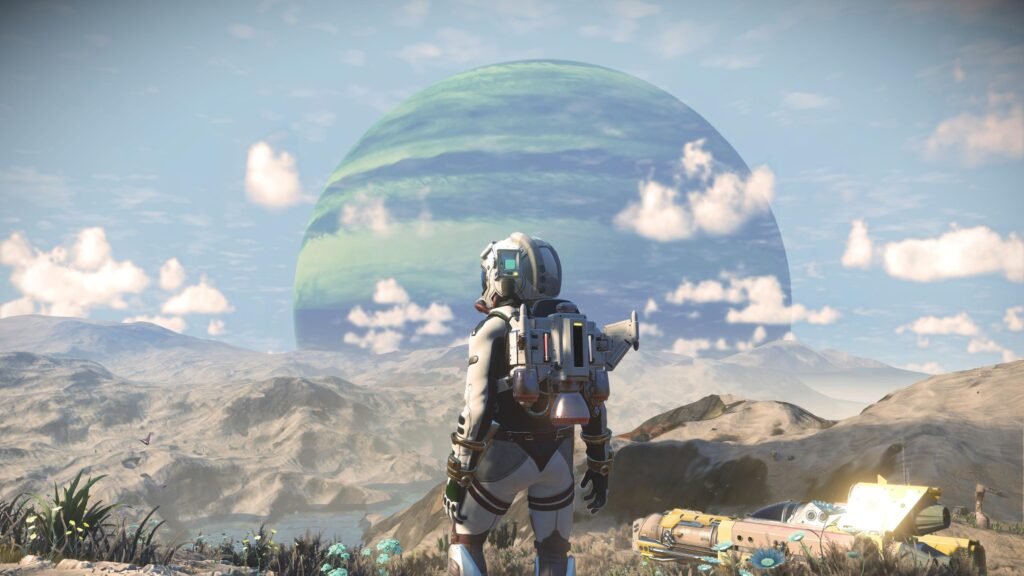
Hello Games took another approach: procedural generation on an almost unimaginable scale.
Exploration, survival, base building, discovering alien species, and multiplayer adventures lie at the heart of its experience.
Since its release in 2016, the studio has considerably expanded its universe, introducing new gameplay mechanics, customizable spacecraft, and increasingly diverse environments.
However, Hello Games does not attempt to replicate the same level of logistical detail, vehicle functionality, or complex physical interactions found in Star Citizen.
Its visual approach and deliberately more accessible gameplay mechanics allow the studio to focus its resources on the variety of experiences it offers.
Player freedom takes precedence over simulation fidelity.
Starfield: Putting Storytelling First
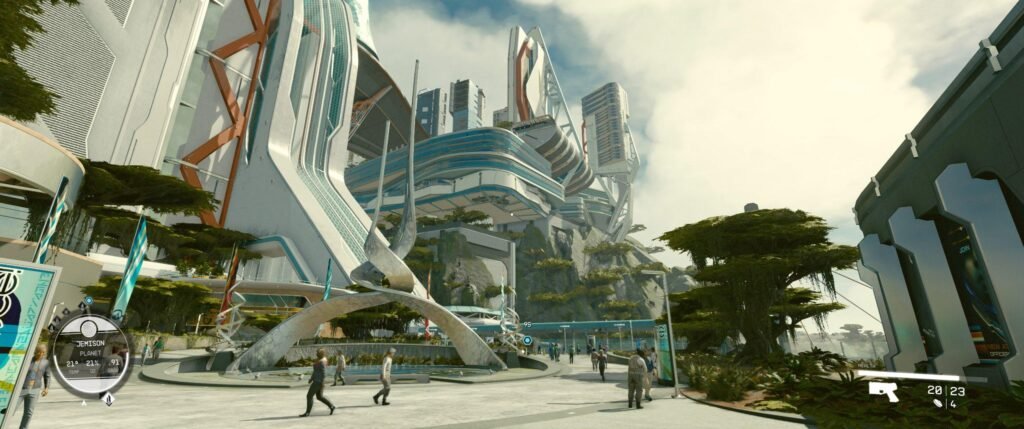
With Starfield, Bethesda Game Studios leaned more heavily into its traditional area of expertise: role-playing games.
Character creation, dialogue, quests, storytelling, and the discovery of environments designed to host meaningful narratives form the foundations of its experience.
Using transitions between certain locations and travel sequences also reduces the need to continuously simulate the entire universe.
While this decision has sometimes been criticized by space simulation enthusiasts, it follows a production strategy consistent with the game’s objectives.
Bethesda primarily seeks to tell stories in space, while Cloud Imperium Games wants to create a space where players can write their own.
Four Games, Four Philosophies
| Game | Primary Ambition | Philosophy |
|---|---|---|
| Star Citizen | Simulation and immersion | A physically coherent, shared universe |
| Elite Dangerous | Astronomical exploration | Recreating the galaxy |
| No Man’s Sky | Discovery and creativity | Offering vast freedom of exploration |
| Starfield | Role-playing and storytelling | Telling stories within a space setting |
These different approaches highlight a truth often overlooked in gaming debates: technological complexity is not a universal measure of a video game’s quality.
A game doesn’t need to simulate everything to be exceptional.
The Real Obstacle May Not Be Technological, but Financial
If Rockstar Games, Microsoft, Sony, or Electronic Arts decided tomorrow to develop a direct competitor to Star Citizen, would they have the necessary technical resources?
Most likely.
These companies have considerable financial resources, experienced development teams, and decades of expertise in producing complex video games.
The real question is whether such an investment could generate a sufficient return.
In 2023, as part of its investigation into Microsoft’s acquisition of Activision Blizzard, the UK’s Competition and Markets Authority highlighted the dramatic increase in video game development budgets.
While major productions once commonly required between $50 million and $150 million, some projects were now exceeding $200 million or even $300 million, before marketing expenses were taken into account.
A few examples illustrate the scale of these investments :
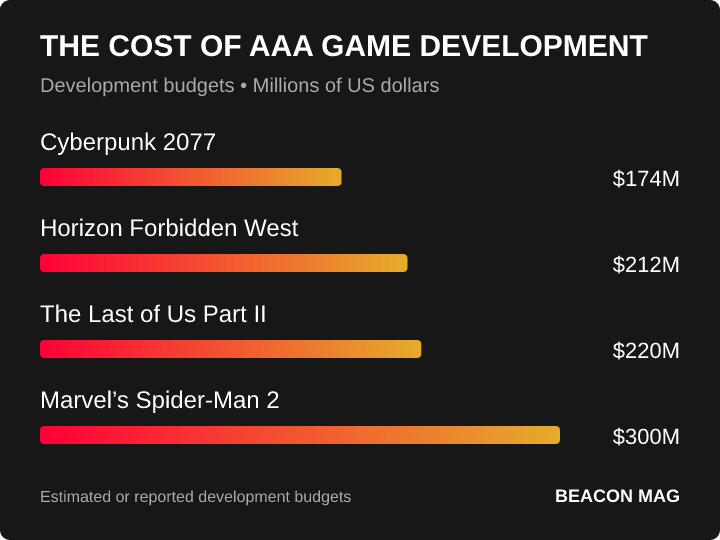
These figures illustrate a particularly challenging industrial reality. Every additional year of development means more salaries, infrastructure, licensing fees, technical services, and operating expenses that must eventually be offset by revenue.
Now imagine a traditional publisher presenting investors with a space simulation project requiring more than a decade of development, hundreds of millions of dollars, and the creation of technologies that remain partly experimental.
There would probably need to be coffee at that meeting. Lots of coffee.
For publishers, the question isn’t simply whether a project is technically feasible. They must also determine whether it represents the best possible investment compared with other productions they could fund.
And in that respect, Star Citizen represents a particularly risky bet.
Crowdfunding: Star Citizen’s Greatest Strength and Greatest Weakness
Cloud Imperium Games operates under unusual circumstances.
A significant portion of its funding comes directly from players purchasing game access, spacecraft, and various forms of content, sometimes years before those products are finalized.
This does not mean the company relies exclusively on its community. In 2018, CIG announced a $46 million private investment primarily intended to support the marketing of Squadron 42.
Nevertheless, direct player support has given the studio an unusual degree of creative and technological freedom for a production of this magnitude.
While traditional publishers generally have to finance several years of production before releasing a game, CIG generates revenue throughout development.
This approach has allowed the studio to explore particularly risky technological avenues, revise its ambitions, and continue building its universe over an exceptionally long period.
But that freedom also has a downside.
The pressure of a release date, however restrictive it may be, generally forces development teams to prioritize features, abandon certain ideas, and ultimately finish their product.
Without that constraint, a project’s scope can continue to expand.
In software development, this phenomenon has a name: scope creep.
One feature leads to another, a new technology opens up new possibilities, and systems once considered sufficient suddenly need to be completely redesigned.
Star Citizen illustrates both the advantages and dangers of this dynamic particularly well.
Its business model allows it to push certain industry boundaries, but it also contributes to a situation in which funding continually precedes the completion of the product.
That ambiguity deserves scrutiny, regardless of the game’s qualities or the talent of its developers.
The Price of Independence: CIG Must Also Take Responsibility for Its Mistakes
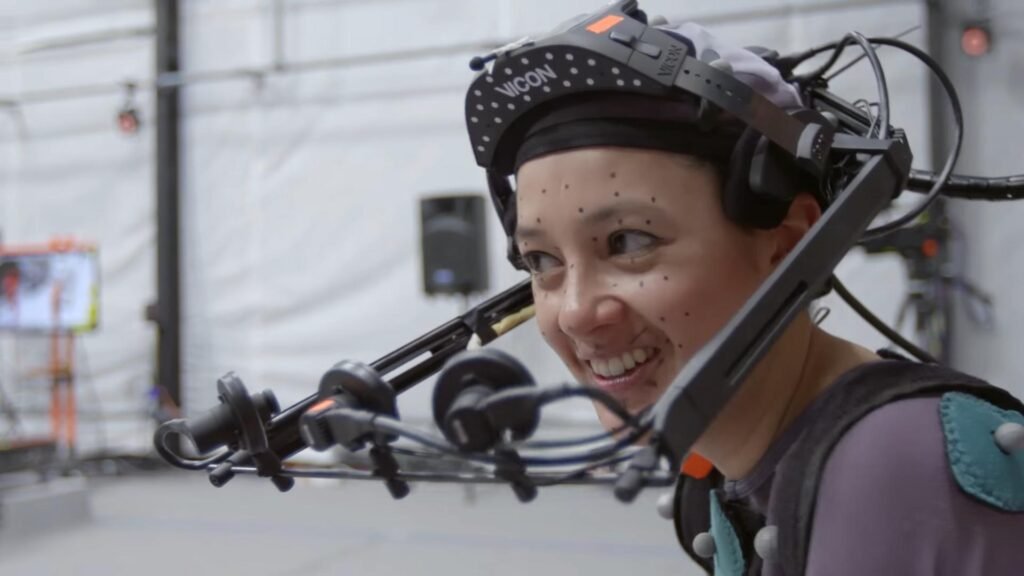
It would be tempting to attribute all of Star Citizen’s delays solely to the technological complexity of the project.
Doing so would overlook the fact that video game development also depends on human, organizational, and strategic decisions.
Constantly evolving ambitions, multiplying objectives, redesigning existing systems, and overly optimistic scheduling estimates have all contributed to the challenges faced by Cloud Imperium Games.
The absence of a traditional publisher does not absolve a studio of responsibility.
Players who have financially supported the project for years have every right to expect results, realistic commitments, and transparent communication.
It is also important to remember that Star Citizen’s crowdfunding total does not directly correspond to its development budget. Cloud Imperium Games is simultaneously developing Squadron 42, maintaining its infrastructure, financing commercial activities, and covering the operating costs of multiple studios.
Directly comparing the total amount raised by CIG with the budget of a traditional video game would therefore mean comparing two very different economic realities.
Recognizing the magnitude of the work accomplished does not mean accepting every decision made by the studio as the right one.
Ambition explains some difficulties. It does not automatically justify every delay.
Has the Video Game Industry Lost Its Appetite for Risk?
Over the past several years, major video game productions have become increasingly complex.
Players expect more detailed environments, more realistic animations, larger worlds, and increasingly sophisticated experiences.
At the same time, rising production costs mean that every commercial failure can have devastating consequences.
This naturally encourages some publishers to favor established franchises, proven gameplay mechanics, and business models whose financial performance can be more easily anticipated.
That doesn’t necessarily reflect a lack of creativity among developers.
Behind every major production are artists, engineers, and designers capable of imagining extraordinary experiences. But their ambitions must coexist with financial realities that can be difficult to reconcile with risk-taking.
Fortunately, games like Red Dead Redemption 2, Baldur’s Gate 3, and Microsoft Flight Simulator demonstrate that the industry remains capable of delivering ambitious and innovative experiences.
Star Citizen is therefore not the last bastion of innovation in video games.
Instead, it represents a particularly radical form of innovation, one in which technological research and creative ambition have long occupied an unusual position relative to traditional commercial constraints.
That is what makes its journey both fascinating and troubling.
What If Star Citizen’s Real Competitor Doesn’t Exist Yet?
One of the most interesting consequences of Cloud Imperium Games’ work could ultimately extend far beyond its own universe.
The technologies the studio is developing address challenges that could potentially affect the entire video game industry.
Creating persistent worlds, generating believable environments at scale, synchronizing physical objects, and dynamically distributing simulations across multiple machines could become major challenges for future generations of video games.
Imagine a medieval game in which thousands of players contribute to the evolution of a persistent kingdom.
An urban simulation whose inhabitants continue their daily activities regardless of whether the player is present.
Or an open world in which every building can be explored, every vehicle operated, and every object physically manipulated.
These possibilities do not depend exclusively on CIG’s technologies. Other companies and researchers are also working on distributed simulation and procedural generation solutions.
However, Star Citizen represents a particularly interesting testing ground because it attempts to bring these challenges together within a product accessible to the public.
Its legacy may ultimately lie as much in the solutions it develops as in the mistakes it helps identify.
Provided, of course, that these technological advances can eventually be transformed into a stable, coherent, and genuinely complete experience.
Conclusion: The Game No One Really Wants to Replicate

Why has no other major studio taken on exactly the same challenge as Cloud Imperium Games?
Probably because Star Citizen is not built around a single challenge, but dozens of technological, artistic, human, and economic challenges brought together within the same project.
Another studio could certainly develop a comparable space simulator. It might even surpass Star Citizen in certain areas.
But would it be willing to commit so many resources, over so many years, with such a high degree of uncertainty?
That’s far less obvious.
Star Citizen represents both what the video game industry can accomplish when it pushes beyond its traditional constraints and what can happen when a project struggles to define the limits of its own ambitions.
That is the central contradiction of this extraordinary undertaking.
It reminds us that innovation sometimes requires taking considerable risks, but also that managing those risks is an essential part of the skill involved in creating a video game.
Cloud Imperium Games has yet to demonstrate that it can bring its entire project to completion. However, the studio has already demonstrated that certain technological boundaries can be pushed further.
And what if Star Citizen isn’t ultimately the game every other studio should try to replicate?
Perhaps it’s the game they should learn from, both from its successes and its failures.


Comments 0
No comments yet: start the conversation!
Your Discord name and picture will sign your comment. Be courteous: inappropriate comments are removed.