

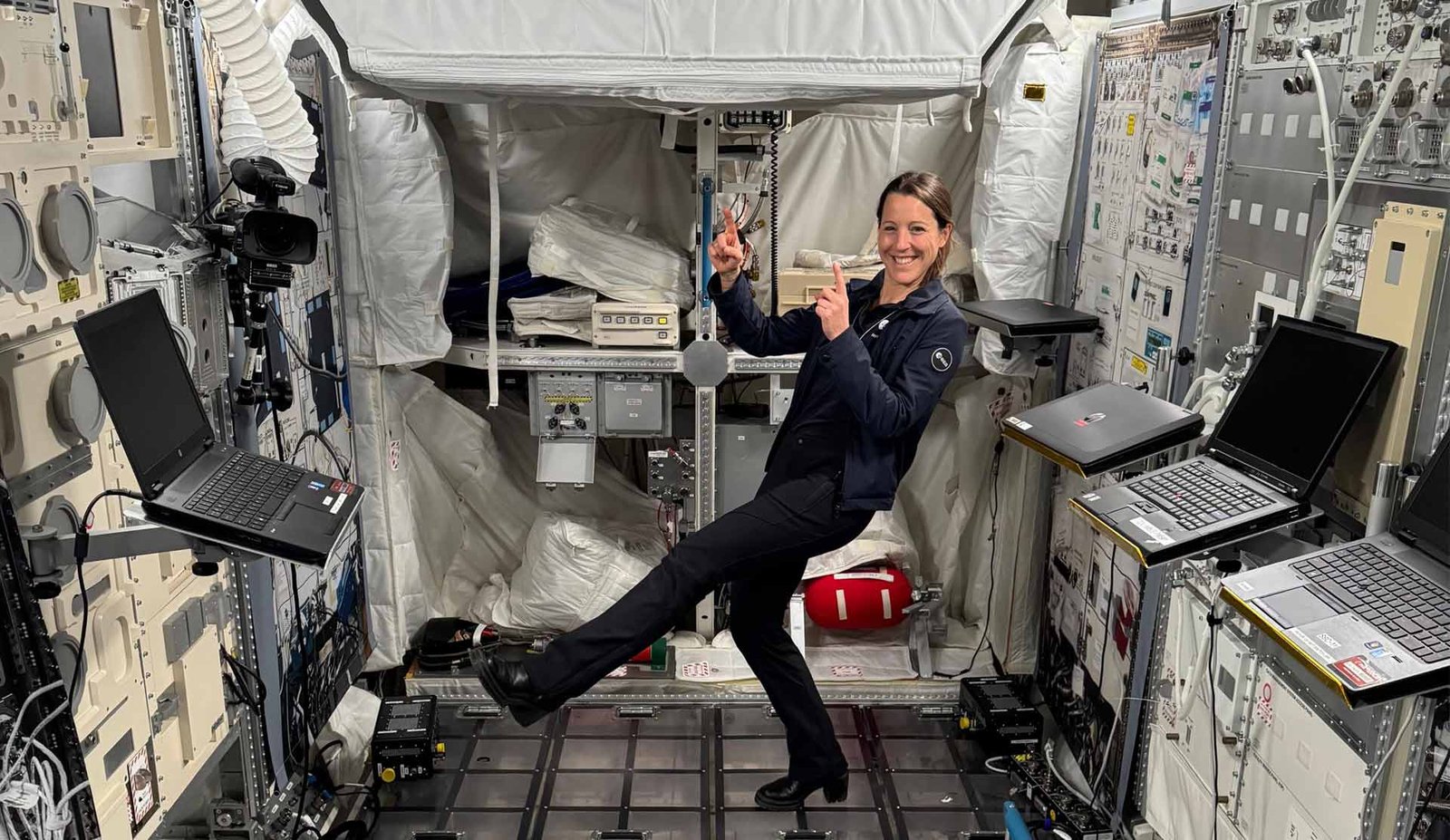
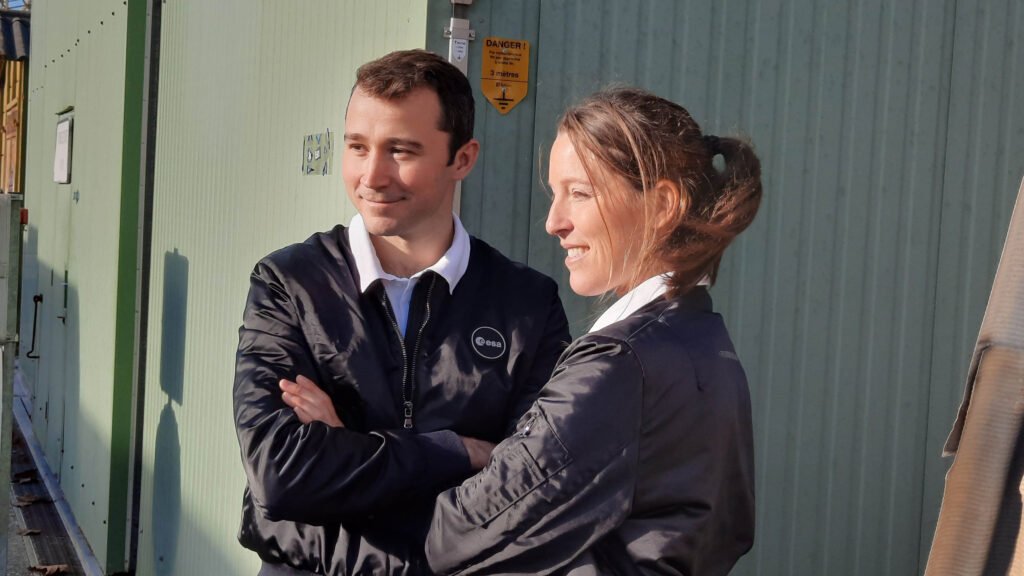
Who is Sophie Adenot?
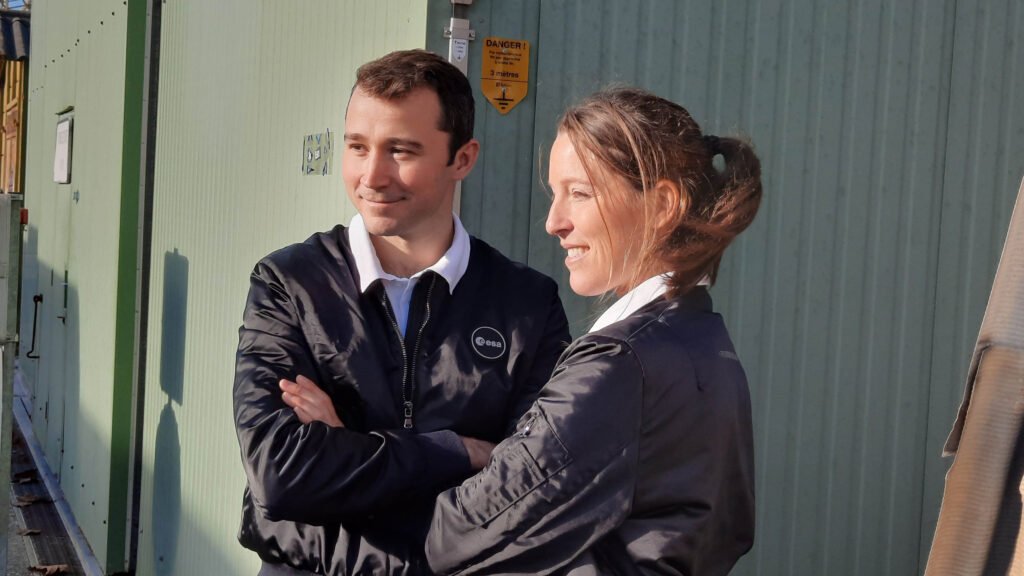
Before becoming an astronaut, Sophie Adenot was just about everything that flies with rotor blades. Born on 5 July 1982 in Cosne-Cours-sur-Loire, in the Nièvre, she went through ISAE-Supaéro, then MIT, where she devoted her thesis to the way the inner ear adapts to artificial gravity. In other words, the subject of her future career was already there in black and white in 2004.
She started out as an engineer at Airbus Helicopters, where she designed cockpits, before joining the French Air Force in 2005. As a helicopter pilot, she flew one search-and-rescue mission after another on the Caracal with the 1/67 “Pyrénées” squadron, then transported the highest authorities of the State. In 2018, she became the first female helicopter test pilot in France. Her tally at the time of her selection: more than 3,000 flight hours on 22 types of aircraft. She is now a colonel.
A detail that matters: Sophie Adenot had already applied to become an astronaut in 2008. Rejected. She tried her luck again fourteen years later and stood out among some 22,500 candidates, with ESA’s class of 2022, nicknamed “The Hoppers”. She thus became the second Frenchwoman in the European astronaut corps, after Claudie Haigneré. Perseverance, orbital edition.
The journey: the Epsilon mission
Her mission is named Epsilon, the Greek letter that maths people use to denote a tiny quantity. The patch pairs it with a hummingbird, a nod to the fable of the bird that does its part to put out the fire, one drop at a time. The message is clear: every contribution counts, even the smallest. Spoiler: hers was anything but small.
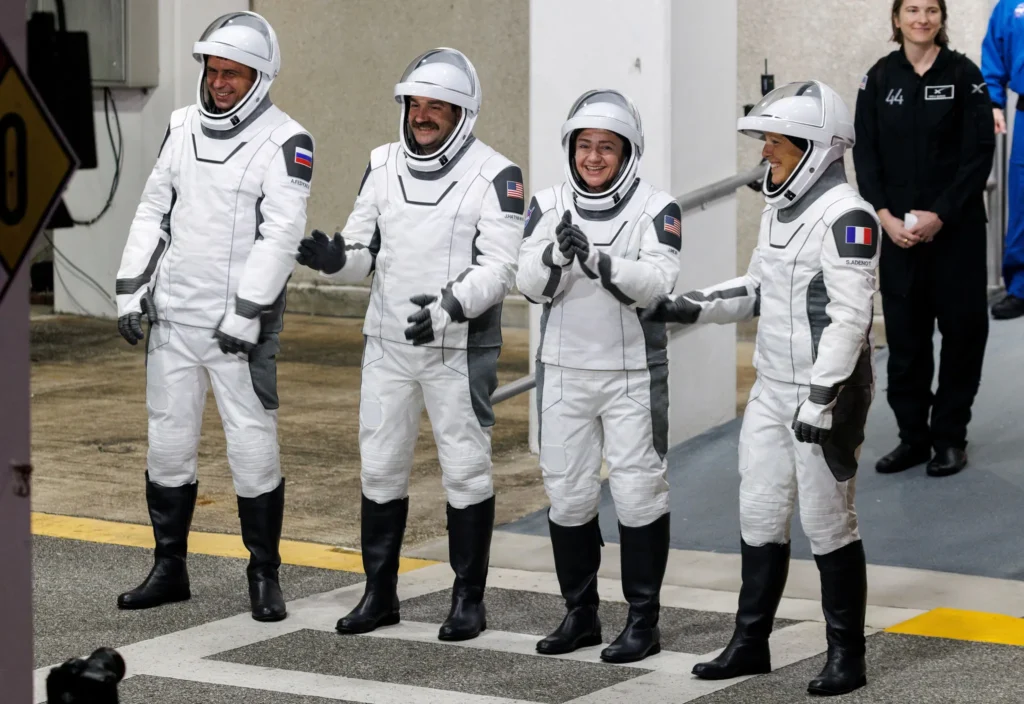
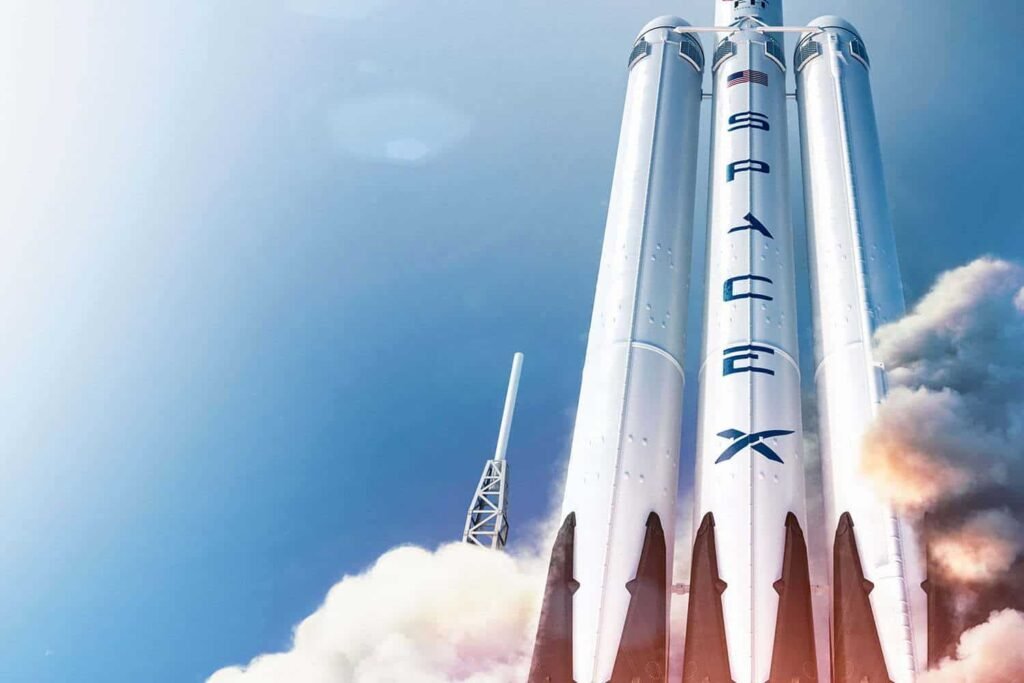
On 13 February 2026, after a few weather delays, a SpaceX Falcon 9 lifted off from Cape Canaveral carrying the Crew Dragon capsule “Freedom”. Alongside Sophie Adenot: American Jessica Meir, the commander, her compatriot Jack Hathaway, the pilot, and Russian cosmonaut Andrey Fedyaev. For her as for Hathaway, it was a first trip to space. Docking with the ISS took place the next day, 14 February. The most expensive Valentine’s date in history, and probably the most punctual.
Crew-12’s arrival came at just the right time: the station had been running with a reduced crew since Crew-11’s early return in January, following a medical issue with one crew member. With it, the ISS was back to seven occupants.
On board, the schedule was packed: close to 200 scientific and technological experiments. Ultrasound scans performed autonomously, synchronised physiological sensors, bone density and blood flow measurements, monitoring of microbial contamination on surfaces, plant growth… She also tested, three times, the EuroSuit, a prototype European spacesuit for use inside spacecraft. In short, eight months of serving as scientist, technician and guinea pig all at once.
But the real highlight came at the end of the summer. On 18 August, alongside NASA astronaut Anil Menon, Sophie Adenot stepped out into the vacuum for the first time: 6 hours and 23 minutes spent replacing a communications antenna. A few stubborn bolts and an obstinate connector slowed the job down, proof that 400 kilometres up, just as in a garage, there is always one part that refuses to cooperate. That day she became the first Frenchwoman to perform a spacewalk, the second European woman after Samantha Cristoforetti, and the first European woman to wear the American EMU suit.
She did it again on 25 August, still with Menon, then on 1 September for an all-female spacewalk with Jessica Meir, this time as lead spacewalker. The tally: three spacewalks in two weeks, for a total of 19 hours and 42 minutes spent outside.
“Without a doubt, for me, the spacewalks will remain the high point of this mission.” Sophie Adenot, from the ISS
On 3 September, she passed the mark of 200 consecutive days in space. She would go on to overtake Luca Parmitano and Thomas Pesquet and set the longest spaceflight ever made by a European astronaut, men and women alike.
The return: “send me to space, please!”
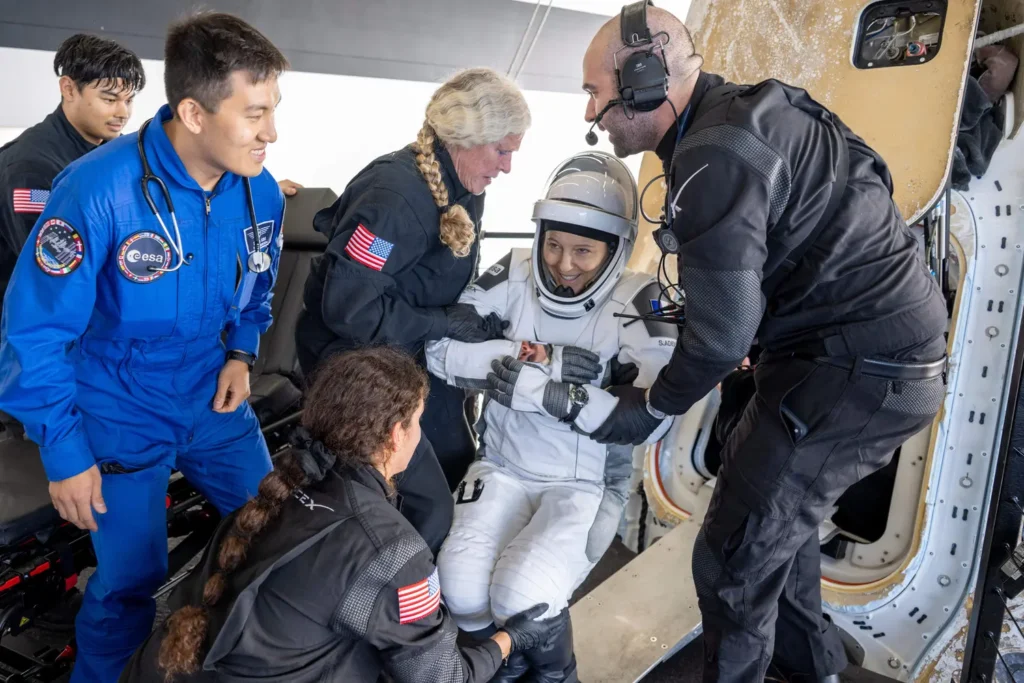
On 7 October, the hatch closed at 12:05 p.m. Paris time, and Freedom undocked from the station two hours later. Then began a return trip of more than 27 hours, which ended on Thursday 8 October at 5:34 p.m. with a splashdown in the Pacific, off the coast of California, where the recovery ship Shannon was waiting for the crew. Final tally: 237 days in space, including about 235 aboard the ISS.
The hardest moment of the trip? Not re-entry, but the twenty minutes or so spent waiting in the capsule, tossed about by a rough sea. Enough to make anyone seasick after eight months with no up or down. Which did not stop her, barely out of Freedom, from calling out to the recovery team: “Send me to space, please!” Some people ask for a coffee when they get off the plane. To each their own priorities.
After a stop in Houston, she returned to Europe aboard an A330 MRTT Phénix of the French Air and Space Force, which had flown out from Istres. On Saturday 10 October, she landed in Cologne, where the European Astronaut Centre was waiting for her. Visibly weakened, supported by two ESA doctors as she stepped off the plane, she turned down the wheelchair that had been laid on and walked the last few metres to the lectern, to the applause of her colleagues and in the presence of the French Minister of the Armed Forces, Alice Rufo.
“Coming back to Earth is no piece of cake.” Sophie Adenot, in Cologne
Moved to tears, she said she had been through “every human emotion” and spoke of “a cocktail of astonishing emotions”. An “ultra-transformative” stay which, in her words, marks “a before and an after”. And a view of the planet that has changed: seen from above, “there are no divisions, no borders. You just see a precious planet that we all share”.
Now for the least glamorous phase of the job: readaptation. After eight months in weightlessness, muscles and bones have wasted away and the cardiovascular system has to get used to gravity again. About three weeks of rehabilitation, tests and debriefings await her in Cologne. She sums it up with the sincerity of someone who really did try to walk this weekend: the feeling of “relearning how to live, like a baby learning to walk”.
Epsilon, really?
First Frenchwoman to walk in space, European record for flight duration, three spacewalks in a fortnight, close to 200 experiments: for a mission that was meant to be the hummingbird’s little drop of water, it missed the mark. Or rather, it succeeded beyond anything the name suggested. The ISS should keep operating until 2030 before being deorbited over the Pacific. And if her first request on touching the water is anything to go by, Sophie Adenot has no intention of staying on solid ground for very long.

Comments 0
No comments yet: start the conversation!
Your Discord name and picture will sign your comment. Be courteous: inappropriate comments are removed.