
Stories ahead of their time
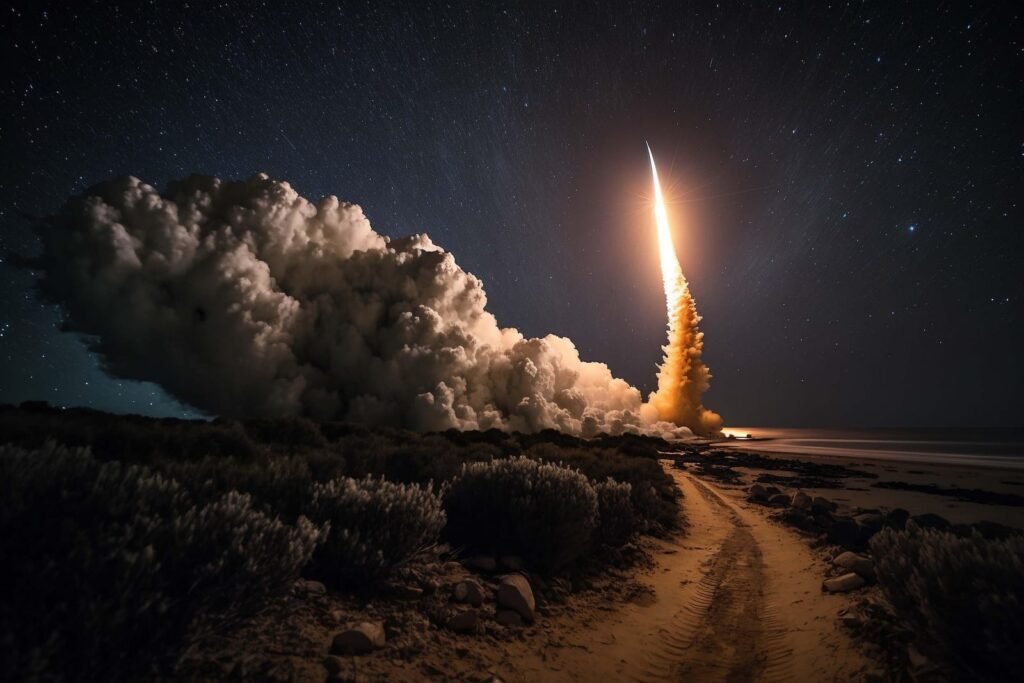
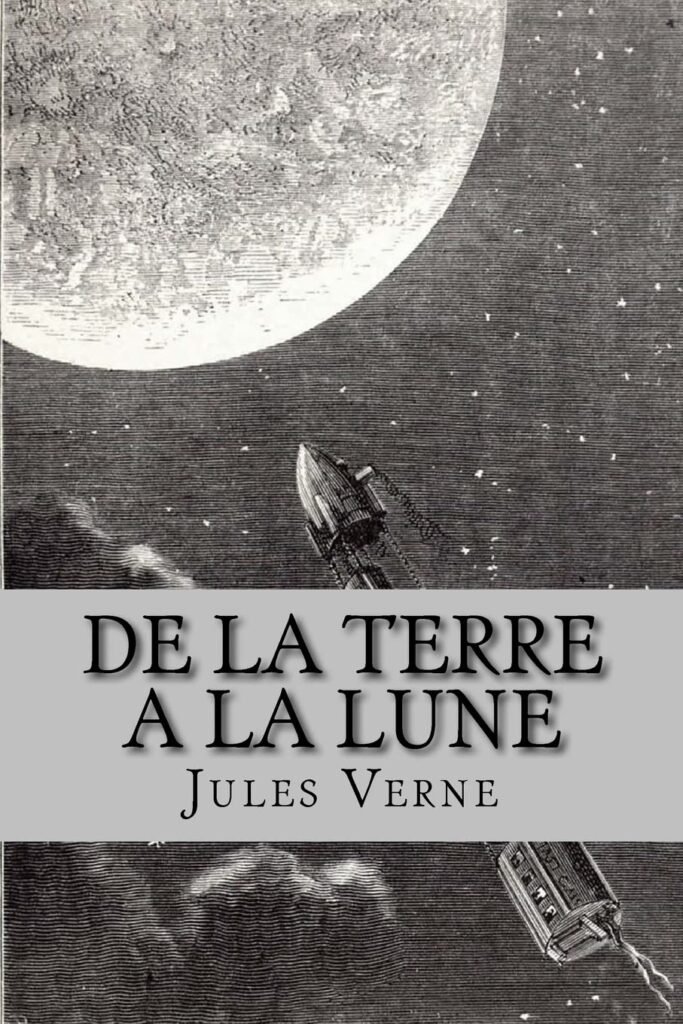
In 1865, Jules Verne published From the Earth to the Moon. His giant cannon is anything but realistic: the acceleration would have crushed the crew at launch. But the novelist did his sums in earnest, set his launch site in Florida and put three passengers aboard his projectile.
A century later, in December 1968, the three astronauts of Apollo 8 also lifted off from Florida to fly around the Moon. The coincidence only goes so far, but the real point lies elsewhere: Verne made the journey thinkable, and generations of readers grew up with the idea in their heads.
In 1920, the Czech playwright Karel Čapek wrote R.U.R., a play in which artificial workers turn on their makers. The word ‘robot’, from the Czech robota (‘forced labour’), passed into every language. Before it was a machine, then, the robot was a question: what becomes of work once it can be manufactured?
In 1945, Arthur C. Clarke, then a radar specialist in the Royal Air Force, published an article in the magazine Wireless World. In it he explained that three satellites placed in geostationary orbit would be enough to relay communications across the whole planet. He got the details wrong, since he pictured crewed stations, but the idea was sound.
Less than twenty years later, in 1964, the Syncom 3 satellite relayed the Tokyo Olympics across the Pacific. Today television, weather forecasting and telecommunications all depend on that orbit, sometimes nicknamed the ‘Clarke orbit’.
From the novel to the laboratory
Science fiction does not only anticipate: it recruits. Robert Goddard, the American pioneer of liquid-fuelled rockets, said he found his vocation as a teenager reading H. G. Wells’s The War of the Worlds. The Russian Konstantin Tsiolkovsky and the German Hermann Oberth, two other fathers of astronautics, both named Jules Verne as their starting point.
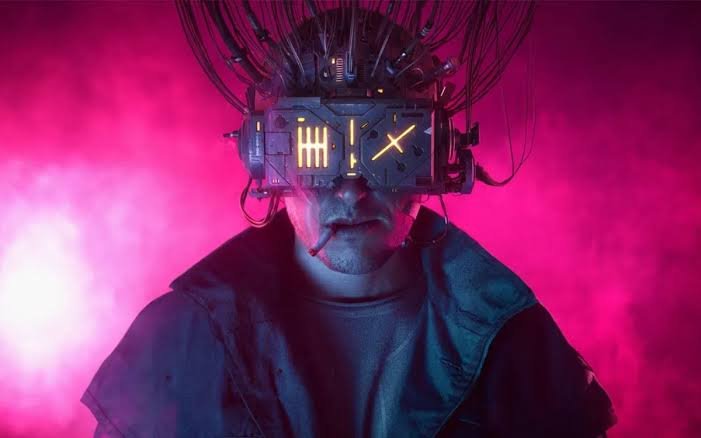
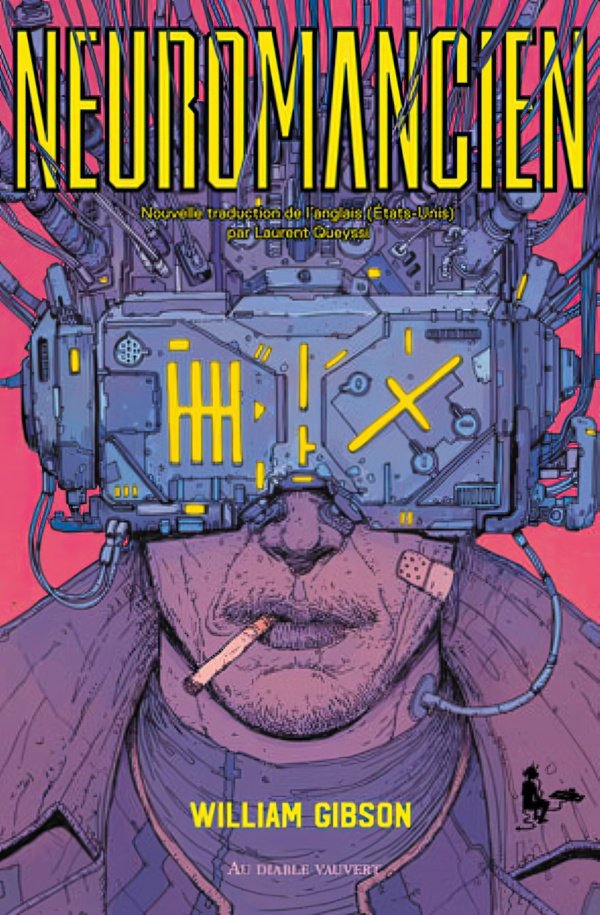
Words travel the same road. ‘Cyberspace’ comes from William Gibson, who popularised it with Neuromancer in 1984. ‘Metaverse’ comes from Neal Stephenson’s Snow Crash, published in 1992, almost thirty years before an entire industry seized on it.
Institutions have ended up taking the method seriously. In France, the Ministry of the Armed Forces set up the Red Team Défense in 2019: science fiction authors, screenwriters and illustrators tasked with imagining the threats of 2030 to 2060. The aim was not to guess the future, but to force strategists to consider what they had not planned for.
The initiative also split the French SF community, with some authors seeing it as the genre being put to use by the state. Proof that the imagination is never neutral: to say which future you fear is already to take a side.
A mirror of our anxieties
SF is often less about the future than about the present. The American author Ursula K. Le Guin put it bluntly: science fiction is not predictive, it is descriptive. Every era projects on to it whatever keeps it awake at night.
As early as 1818, Mary Shelley’s Frankenstein worried about a science advancing faster than our sense of responsibility. In 1932, Aldous Huxley’s Brave New World pushed the emerging consumer society to its limit. In 1949, George Orwell’s Nineteen Eighty-Four did the same with the totalitarian regimes of his century.
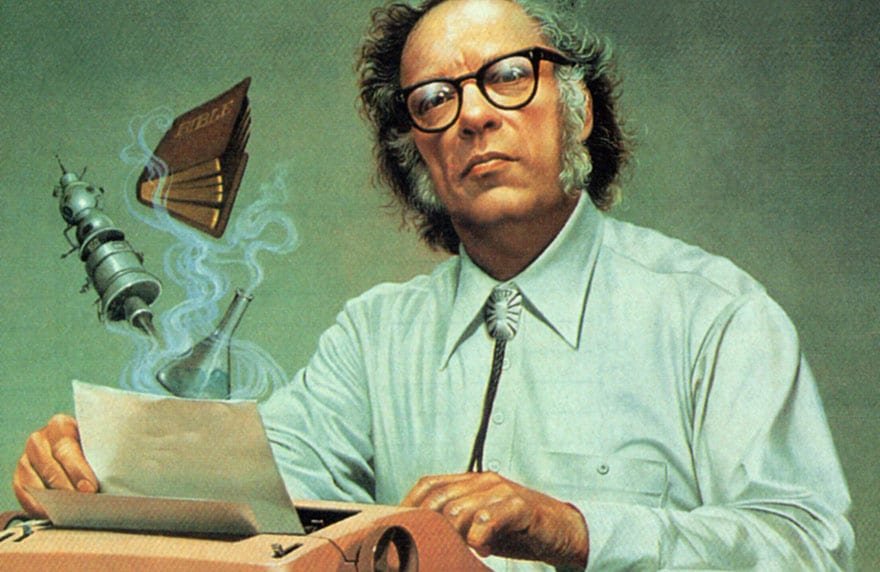
The ‘Three Laws of Robotics’ set out by Isaac Asimov in 1942, in the short story ‘Runaround’, already ask a very contemporary question: how do you govern machines that are capable of deciding? It is often forgotten that almost all his stories show those laws failing, contradicting one another or being worked around.
At a time when lawmakers are trying to regulate artificial intelligence, the lesson still holds: writing a rule is easy, foreseeing every case is not.
French SF has its share of examples. In 1943, René Barjavel’s Ravage (published in English as Ashes, Ashes) imagined an ultra-technological society that collapses the day electricity disappears. In 2019, Alain Damasio’s Les Furtifs described privatised cities where every resident is tracked around the clock.
What now?
Artificial intelligence, the conquest of space, the climate: the three great challenges of the century already have their stories.
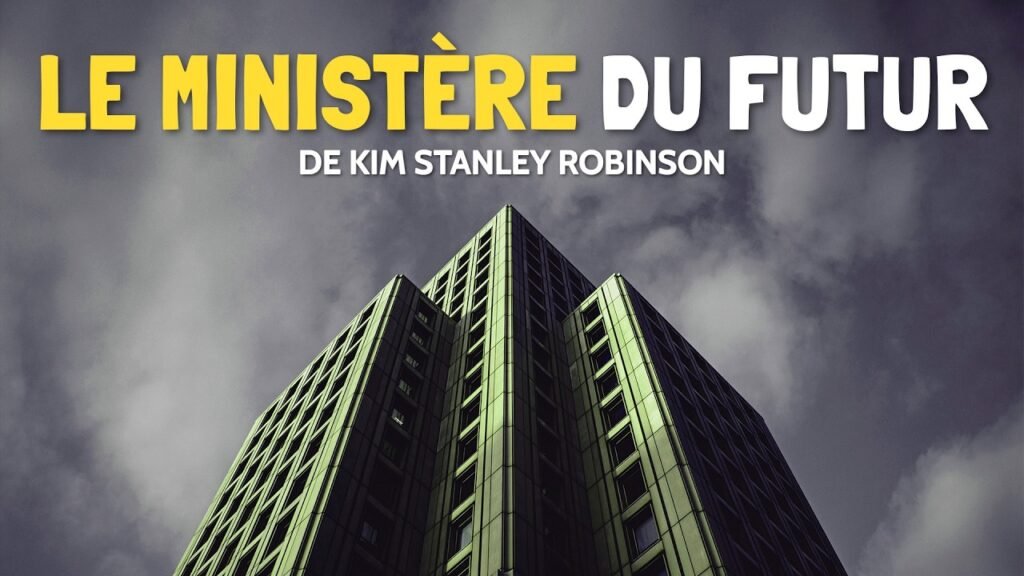
On climate, Kim Stanley Robinson’s The Ministry for the Future (2020) starts from a deadly heatwave and imagines, step by step, how the world might organise itself in the face of global heating. On space, Andy Weir’s The Martian put an engineer’s resourcefulness back at the heart of the Mars adventure, while Liu Cixin’s The Three-Body Problem is a reminder that SF is now written all over the world.
On artificial intelligence, fiction is no longer ahead of the news: it keeps pace with it. In Klara and the Sun (2021), Kazuo Ishiguro tells the story through the eyes of a machine built to keep a child company. The question is no longer whether such machines will exist, but what we expect of them.
None of these books tells us what is going to happen. They help us choose what we want to see happen, and what we would rather avoid. The great stories of tomorrow are being written today: at Beacon Mag, we are following them closely.