

Action, reaction: the party balloon trick
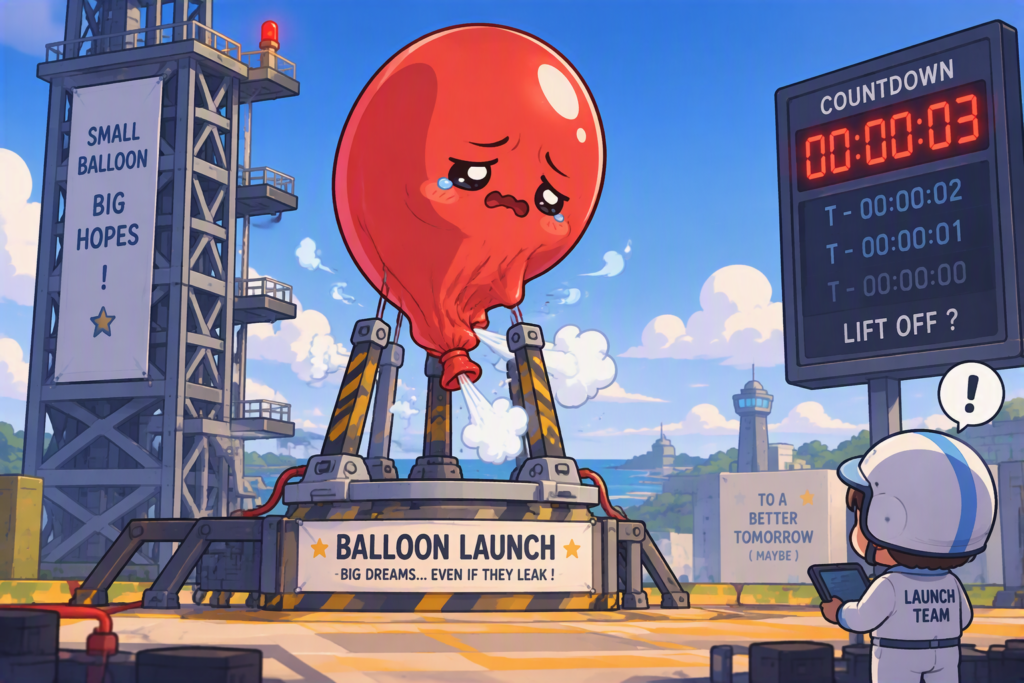
Blow up a balloon and let go without tying it. The air rushes out one side, the balloon shoots off the other way, with a less-than-dignified noise. A rocket does exactly the same thing, only pricier and a great deal louder.
Its engines blast hot gases downward, often at more than 10,000 km/h. In return, the rocket is pushed upward. This is the action-reaction principle, set out by Isaac Newton in 1687: every action has an equal and opposite reaction.
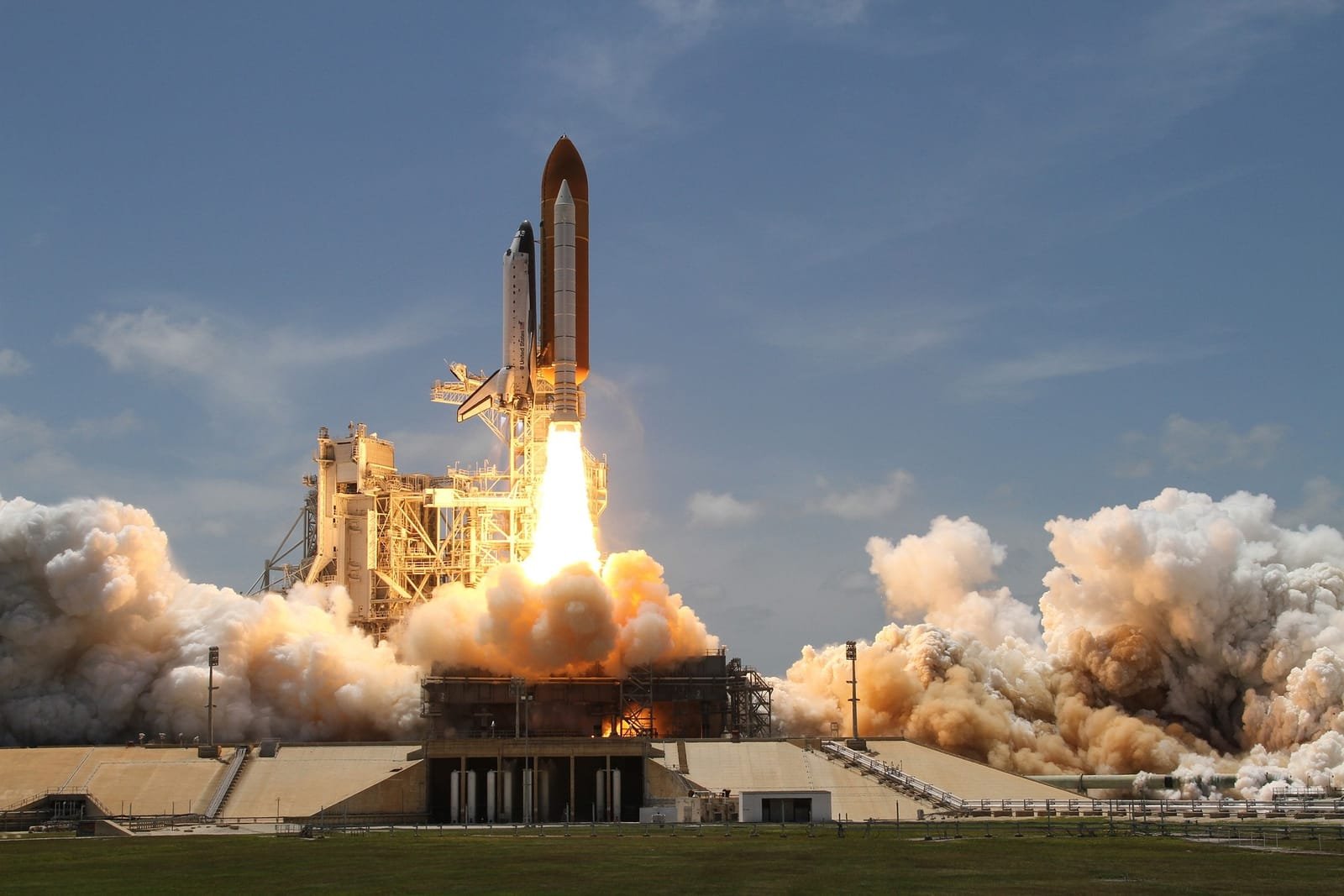
The only condition for liftoff: that thrust must be greater than the rocket’s weight. Otherwise it just sits on the launch pad making a lot of smoke, and everyone feels a bit awkward.
The myth to forget
No, a rocket doesn’t “push against” the ground or the air. It moves because it throws matter out behind it. Sit on a wheeled office chair and hurl a heavy bag in front of you: you roll backward. No wall required.
That’s why a rocket engine works in a vacuum, and even better than on the ground, since there’s no air left to slow things down.
One small detail that changes everything: no air means no oxygen, so nothing burns. The rocket therefore carries its own oxygen too. A car breathes the surrounding air; a rocket travels with its own tank.
Going up is good. Going fast is better
Space isn’t far: it begins about 100 km up. If your car could drive straight up, you’d be there in an hour. The real problem isn’t getting there, it’s staying there.
Climb straight up to 100 km, cut the engines, and you fall right back down. Gravity hasn’t taken the day off.
The trick: falling and missing the ground
Picture a cannon on a mountaintop. Fire a cannonball: it lands a little way off. Fire harder: it lands farther. Fire really, really hard, and because the Earth is round, the ground curves away beneath the ball as fast as it falls.
It is falling the whole time, but it keeps missing the Earth. That is exactly what an orbit is.
To pull this off in low Earth orbit, you need to reach about 7.8 km/s, more than 28,000 km/h. At that pace, Paris to Marseille takes under a minute and a half, with no tolls.
That’s why a rocket tilts over shortly after liftoff. Most of its effort goes not into gaining altitude, but into gaining horizontal speed.
What about floating astronauts?
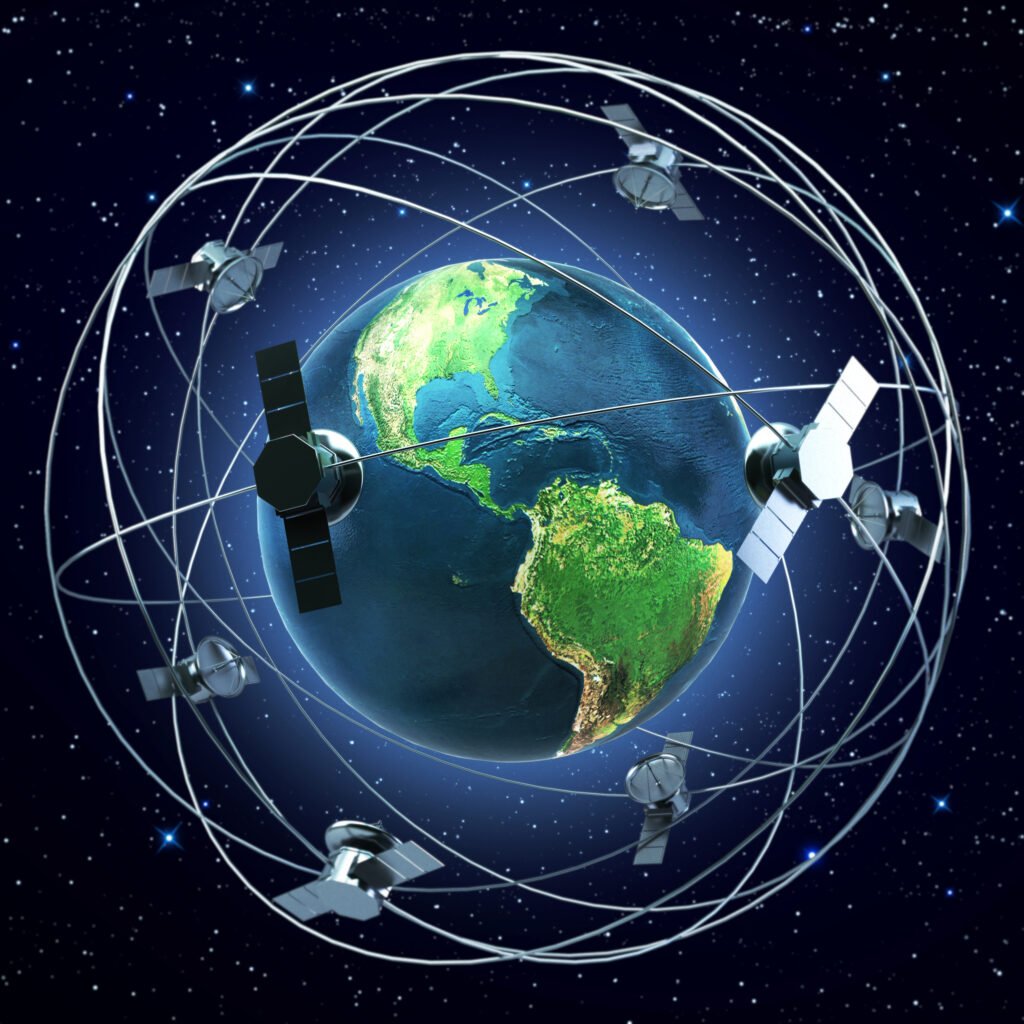
At 400 km up, where the International Space Station flies, gravity is still about 90% of what it is on the ground. Astronauts don’t float because gravity is missing: they are falling continuously, along with their station. That’s how they circle the Earth in roughly an hour and a half.
Leaving for good
Staying in orbit isn’t enough to head for the Moon or Mars. To escape Earth’s pull completely, you have to exceed 11.2 km/s, more than 40,000 km/h. This is called escape velocity.
The free boost
The Earth spins eastward, at about 1,670 km/h at the equator. By launching east from a site near the equator, a rocket picks up that momentum without spending a drop of fuel. It’s one of the reasons Europe launches its rockets from Kourou, in French Guiana.
The rocket’s great tragedy: it mostly carries fuel
Reaching speeds like these means burning an enormous amount of fuel. But that fuel is heavy. So you need fuel to lift the fuel, then more fuel to lift that fuel. You see the problem.
The result: at liftoff, about 90% of a rocket’s mass is fuel and oxygen, which engineers call propellants. The rest is tanks, engines and structure.
And the payload, meaning the satellite or capsule you actually want to send up there? Often 1 to 4% of the total. It’s a bit like hiring a tanker truck to deliver a pizza.
Another way to see it: a soda can is about 95% drink and 5% aluminum. A rocket is almost the same, except the drink catches fire.
Stages dropped along the way
The engineers’ solution is elegantly simple: throw away whatever is no longer useful. A rocket is really a stack of several rockets, the stages, each with its own tanks and engines.
The first stage, the biggest, handles liftoff and empties in two to three minutes. Once dry, it separates. The second stage then ignites and only has to push a much lighter vehicle.
It’s the principle of the hiker who ditches empty water bottles along the trail, backpack included. (When hiking, please don’t.)
The first stage that comes back to land
For decades, discarded stages ended up at the bottom of the ocean. Imagine throwing away an airliner after every flight: tickets would be a little pricey.
Since 2015, some launchers have been bringing their first stage back, starting with SpaceX’s Falcon 9. After separation, the stage flips around, reignites its engines to slow down and lands upright, on a barge at sea or near its launch pad. It is then refurbished and flies again.
The goal is clear: bring down the price of a ticket to space.
A launch, minute by minute
From launch pad to orbit takes less than ten minutes. The timings below are rough figures; they vary from one launcher to another.
- Ignition. Thrust exceeds weight and the rocket rises. Slowly at first: it will never be heavier than this.
- First seconds. It begins to tilt. The race for horizontal speed is on.
- Around 1 minute. It breaks the sound barrier, then passes through the zone where the air presses hardest on its structure. This is when everyone in the control room holds their breath.
- Around 2 to 3 minutes. The empty first stage is dropped. The second takes over.
- Shortly after. Above 100 km there is almost no air left. The fairing, the nose cover that protected the satellite, is jettisoned in turn.
- Around 8 to 10 minutes. Orbital speed is reached and the engine shuts down. The payload is in orbit.
That’s about the time it takes to cook pasta.
The numbers to remember
| Benchmark | Value |
|---|---|
| Where space begins | about 100 km up |
| Speed to stay in low Earth orbit | 7.8 km/s, more than 28,000 km/h |
| Speed to escape Earth | 11.2 km/s, more than 40,000 km/h |
| Share of fuel and oxygen at liftoff | about 90% of the mass |
| Share of the payload | often 1 to 4% of the mass |
| Time to reach orbit | 8 to 10 minutes |
In short, a rocket is a huge amount of fuel pushing slightly less fuel, to put into orbit a tiny something that will spend its time falling and missing the Earth. And the best part is, it works.



Comments 0
No comments yet: start the conversation!
Your Discord name and picture will sign your comment. Be courteous: inappropriate comments are removed.