
Space opera
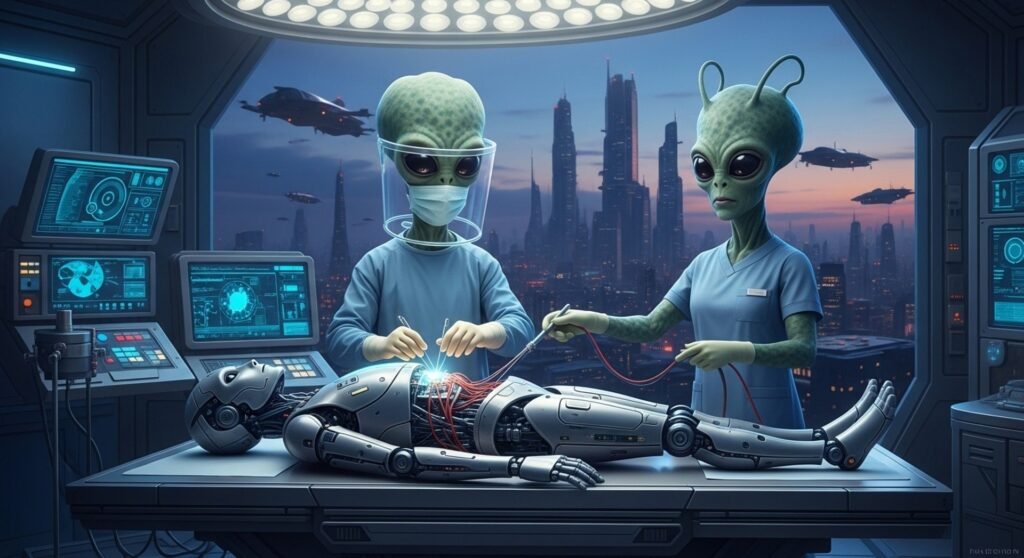
In one line: adventure on a galactic scale.
Space battles, galactic empires, larger-than-life heroes: space opera is all about sweep and escape. Scientific plausibility takes a back seat. Ships travel faster than light and nobody stops to read the manual; what matters is the civilizations, the political intrigue and the sense of epic.
The term was coined in 1941 by the American writer Wilson Tucker, and it was a jab. Modeled on “soap opera” (the sentimental serial) and “horse opera” (the formula western), it targeted the spacefaring yarns churned out for cheap magazines. The insult lost its sting, then became the name of a genre in its own right.
From the 1980s onward, authors such as Iain M. Banks and Dan Simmons gave it new literary and political ambition. This wave is sometimes called “new space opera.”
Where to start: Isaac Asimov’s Foundation series, Dan Simmons’s Hyperion, Iain M. Banks’s Culture series and, from France, Pierre Bordage’s Les Guerriers du silence. On screen: Star Wars, of course, and The Expanse.
Cyberpunk
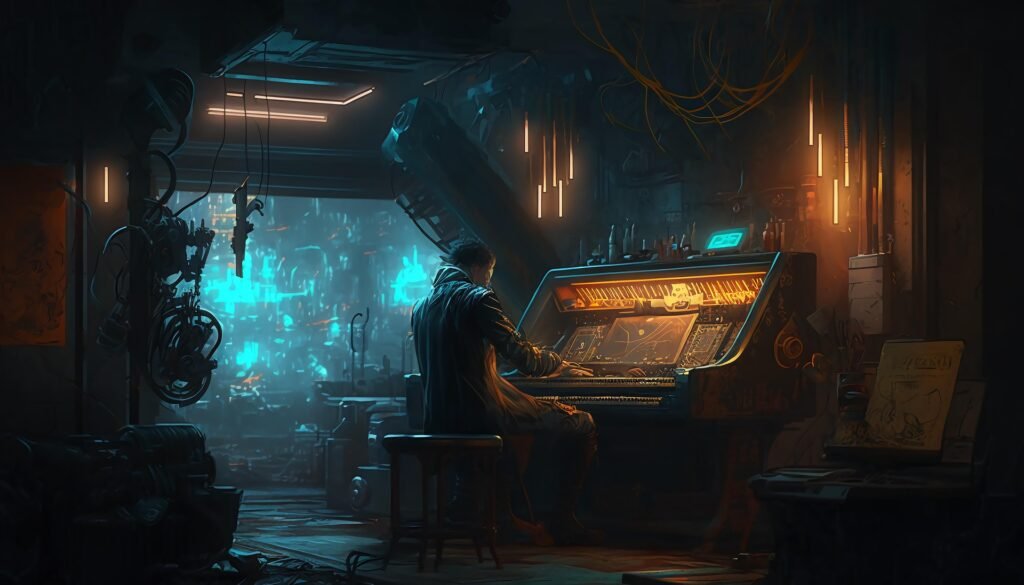
In one line: high tech, low life.
Neon-soaked megacities, computer networks everywhere and corporations more powerful than governments. Cyberpunk is set in the near future and looks at society from the bottom up. Its heroes are hackers, mercenaries and outcasts, often loaded with implants.
Behind the scenery, one question keeps coming back: what is left of being human when body, memory and identity become commodities?
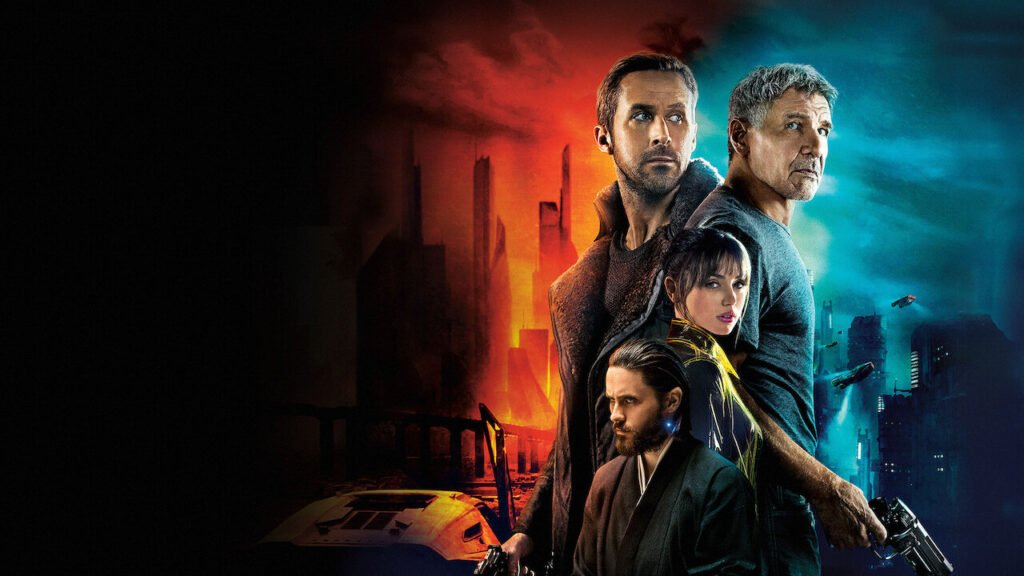
The word first appeared in 1983 as the title of a short story by the American writer Bruce Bethke. The critic Gardner Dozois then picked it up to describe a whole generation of authors. The look, meanwhile, owes a great deal to Ridley Scott’s film Blade Runner (1982).
In 1984, William Gibson’s Neuromancer gave the movement its founding novel and popularized the word “cyberspace.” The book won the Hugo, Nebula and Philip K. Dick awards, an unprecedented sweep. Japan quickly made the genre its own with Akira and Ghost in the Shell, before The Matrix (1999) and the video game Cyberpunk 2077 (2020) cemented it in popular culture.
Where to start: William Gibson’s Neuromancer, Neal Stephenson’s Snow Crash, Richard Morgan’s Altered Carbon. On screen: Blade Runner, Akira, Ghost in the Shell, The Matrix.
Hard SF
In one line: science sets the rules.
Here, science takes center stage. Authors strive to respect the laws of physics, or to extrapolate from them rigorously. An orbit, an oxygen supply or a communication delay becomes a source of drama, and much of the pleasure lies in watching a problem get solved.
“Hard” refers to the hard sciences, not to how difficult the books are to read, although some of them are demanding. The term is credited to the critic P. Schuyler Miller, who used it in 1957 in the magazine Astounding Science Fiction.
The approach is older than the word: Jules Verne was already lining up calculations in From the Earth to the Moon (1865). Arthur C. Clarke and Hal Clement turned it into a school in the mid-20th century. Kim Stanley Robinson, Greg Egan and China’s Liu Cixin carry it on today.
Andy Weir’s The Martian is the most popular recent example. First self-published online in 2011, the novel was adapted for the screen by Ridley Scott in 2015.
Where to start: Andy Weir’s The Martian, Arthur C. Clarke’s Rendezvous with Rama, Kim Stanley Robinson’s Mars trilogy, Liu Cixin’s The Three-Body Problem. On screen: 2001: A Space Odyssey and The Martian.
Solarpunk
In one line: what if things turned out well?
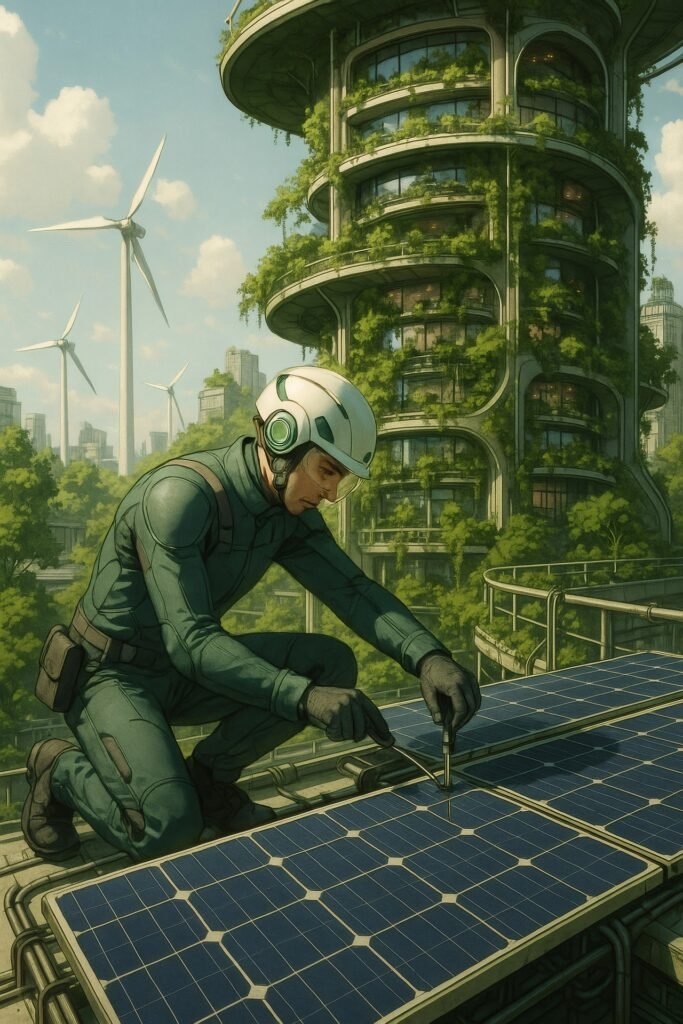
This is cyberpunk’s optimistic opposite. Solarpunk imagines societies that have pulled off their ecological transition through technology and cooperation. Green cities, renewable energy, repair instead of replacement, human-scale communities: the setting is as bright as cyberpunk’s is dark.
Optimistic does not mean naive. Conflict still exists, but the question changes: it is no longer about surviving, it is about living well together. Solarpunk is in fact as much an aesthetic and an activist movement as it is a literary genre.
The word has circulated online since 2008. It took shape in 2012 with a Brazilian anthology that carried it in its title, then spread across social media. Its roots go further back: Ursula K. Le Guin’s The Dispossessed (1974) and Ernest Callenbach’s Ecotopia (1975) were already sketching credible alternative societies.
Where to start: Becky Chambers’s A Psalm for the Wild-Built, winner of the 2022 Hugo Award for Best Novella, and Ursula K. Le Guin’s The Dispossessed to go back to the source.
Also worth knowing, in brief
- Dystopia. A nightmare society, presented as a warning. George Orwell’s Nineteen Eighty-Four, Aldous Huxley’s Brave New World, Margaret Atwood’s The Handmaid’s Tale.
- Post-apocalyptic. The world after the collapse, and the people trying to survive in it. René Barjavel’s Ravage (published in English as Ashes, Ashes), Cormac McCarthy’s The Road, the Mad Max saga.
- Alternate history. What if history had taken another turn? In Philip K. Dick’s The Man in the High Castle, the Axis won the Second World War.
- Steampunk. A future imagined from the 19th century, all steam engines, brass and airships. The word was coined in 1987 by the author K. W. Jeter as a nod to cyberpunk. Read: The Difference Engine by William Gibson and Bruce Sterling.
- Planetary romance. Also called planet opera: adventure focused on a single world, explored in detail. Frank Herbert’s Dune, Jack Vance’s Planet of Adventure series.
Labels, not boxes
None of these families is watertight. The Expanse pairs the sweep of space opera with the rigor of hard SF. Blade Runner is both a cyberpunk landmark and a dystopia. Dune is part space opera, part planetary romance and part ecological novel.
Subgenres remain good ways in. If one of them appeals to you, start with a work from its list, then let yourself drift toward the family next door: science fiction is often at its most interesting along the borders.

Comments 0
No comments yet: start the conversation!
Your Discord name and picture will sign your comment. Be courteous: inappropriate comments are removed.